
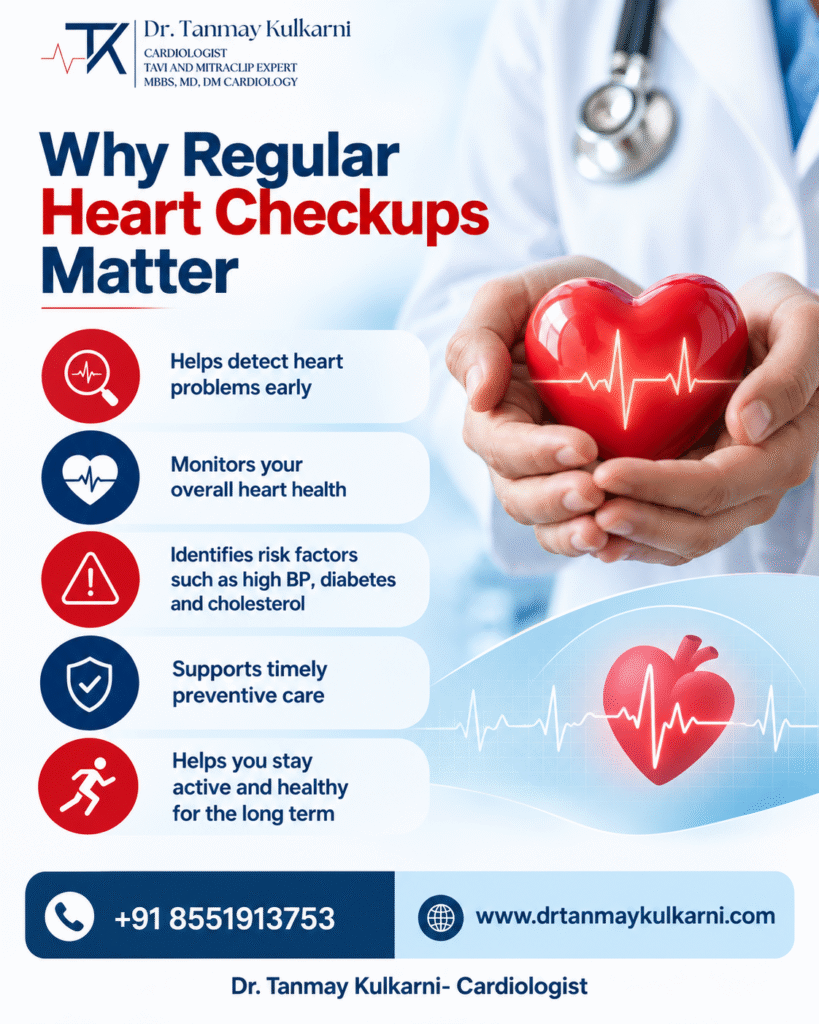
Heart disease can develop gradually, and some important cardiovascular risk factors may not cause noticeable symptoms in the early stages. Regular health assessments can help identify factors such as high blood pressure, abnormal cholesterol, elevated blood sugar, excess weight, smoking, and reduced physical activity.
Understanding your cardiovascular risk can help you discuss appropriate prevention, monitoring, and treatment with a healthcare professional.
For people searching for a Heart Checkup in Pune, understanding what a cardiac evaluation involves and why it may be useful is an important part of taking care of long-term heart health.
Dr. Tanmay S. Kulkarni provides cardiac consultation and evaluation for individuals concerned about their cardiovascular health and risk factors.
Why Are Regular Heart Checkups Important?
A heart checkup is not only about looking for an existing heart condition. It can also involve assessing factors that may influence cardiovascular health over time.
Blood pressure, cholesterol, blood glucose, body weight, lifestyle habits, smoking status, physical activity, sleep, and family history can all contribute to an individual’s overall cardiovascular risk.
The frequency and type of assessment should be based on personal health factors rather than following the same schedule for everyone.
Regular discussions with a healthcare professional can also help you understand your health measurements and determine whether additional testing or lifestyle changes may be appropriate.
Heart Problems May Not Always Cause Early Symptoms
Some cardiovascular risk factors can remain unnoticed because they may not produce obvious symptoms.
For example, high blood pressure may not cause noticeable warning signs. Similarly, cholesterol levels cannot usually be determined simply by how a person feels and require appropriate testing.
Diabetes, kidney health, weight, and lifestyle factors can also influence cardiovascular risk.
This does not mean that everyone needs extensive cardiac testing. The appropriate evaluation should be determined according to individual symptoms, age, medical history, risk factors, and clinical findings.
What Can Be Checked During a Heart Evaluation?
Depending on your health profile, a cardiovascular assessment may include several basic measurements and investigations.
Blood pressure: Regular blood pressure measurement can help identify hypertension, an important cardiovascular risk factor.
Cholesterol: A lipid profile can provide information about cholesterol and triglyceride levels and may help assess cardiovascular risk.
Blood glucose: Blood sugar assessment can help identify diabetes or elevated blood glucose, which are relevant to cardiovascular health.
Weight and body composition: Body weight and, when appropriate, waist measurements may be considered when assessing cardiovascular risk.
Lifestyle assessment: Physical activity, diet, tobacco use, sleep, stress, and other lifestyle factors may be discussed during a preventive consultation.
Additional cardiac investigations are not automatically required for everyone. A cardiologist may recommend tests such as an ECG, echocardiogram, cardiac stress test, or other investigations when symptoms, examination findings, or risk factors indicate that they may be useful.
Who Should Consider Regular Heart Assessments?
The appropriate timing of a cardiac assessment varies from person to person.
People with certain risk factors may benefit from regular monitoring. These can include:
- High blood pressure
- Diabetes
- High cholesterol
- Overweight or obesity
- Smoking or tobacco use
- Family history of cardiovascular disease
- Previous heart or blood-vessel problems
- Reduced exercise tolerance
- Recurrent or unexplained symptoms
People who already have a cardiovascular condition may require additional or more frequent monitoring based on their individual treatment plan.
Younger adults should also pay attention to cardiovascular health. Healthy eating, regular physical activity, avoiding tobacco, maintaining a healthy weight, and understanding personal risk factors can support heart health throughout life.
What Symptoms Should Not Be Ignored?
Routine heart assessments are important, but they should not replace medical attention when concerning symptoms occur.
New or unexplained symptoms such as chest discomfort, breathlessness, fainting, persistent palpitations, unusual reduction in exercise capacity, or swelling associated with other symptoms should be medically evaluated.
Sudden or severe chest pain, severe difficulty breathing, fainting, or symptoms that may indicate a heart attack require urgent medical attention rather than waiting for a routine appointment.
How Lifestyle Fits Into Heart Health
A heart checkup is most useful when it becomes part of a broader approach to cardiovascular health.
Healthy lifestyle habits may include:
- Regular physical activity
- A balanced and nutritious diet
- Maintaining a healthy weight
- Avoiding tobacco
- Getting adequate sleep
- Managing stress
- Monitoring blood pressure
- Managing diabetes and cholesterol when present
- Taking prescribed medications as advised
Lifestyle recommendations should be appropriate for an individual’s health condition. Someone with an existing heart condition may require specific guidance about exercise, diet, medications, or other aspects of daily life.
Regular Monitoring Helps You Understand Your Risk
A single normal checkup does not necessarily mean that cardiovascular risk will remain unchanged forever. Health measurements can change with age, lifestyle, medical conditions, and family history.
Keeping track of important health measurements such as blood pressure, cholesterol, and blood glucose can help you and your healthcare professional identify changes over time.
The goal of regular evaluation is not to create unnecessary worry or testing. It is to understand your individual health profile and make informed decisions about prevention and care.
Cardiac Care With Dr. Tanmay S. Kulkarni
Dr. Tanmay S. Kulkarni is a cardiologist providing cardiac consultation and evaluation for patients concerned about heart health and cardiovascular risk factors.
Individuals looking for a Heart Specialist in Pune, or guidance regarding Preventive Cardiology can discuss their health history, symptoms, risk factors, and appropriate investigations with a qualified cardiologist.
Regular heart assessments, combined with healthy lifestyle choices and appropriate medical care, can form an important part of long-term cardiovascular health.
Frequently Asked Questions
How often should I have a heart checkup?
There is no single schedule suitable for everyone. The frequency depends on factors such as age, medical history, existing conditions, family history, symptoms, and cardiovascular risk.
Can I have heart disease without symptoms?
Some cardiovascular risk factors and conditions may have few or no obvious symptoms in their early stages. Appropriate screening and risk assessment can therefore be useful for eligible individuals.
What tests are included in a heart checkup?
Depending on individual circumstances, an evaluation may include blood pressure measurement, cholesterol and blood glucose testing, medical history, physical examination, ECG, or other cardiac investigations when clinically appropriate.
Is a heart checkup necessary if I feel healthy?
People without symptoms can still have cardiovascular risk factors. A healthcare professional can help determine whether screening or preventive assessment is appropriate based on individual risk.
When should I see a cardiologist?
A cardiologist may be appropriate for persistent or concerning cardiac symptoms, significant cardiovascular risk factors, abnormal test results, or an existing heart condition.