
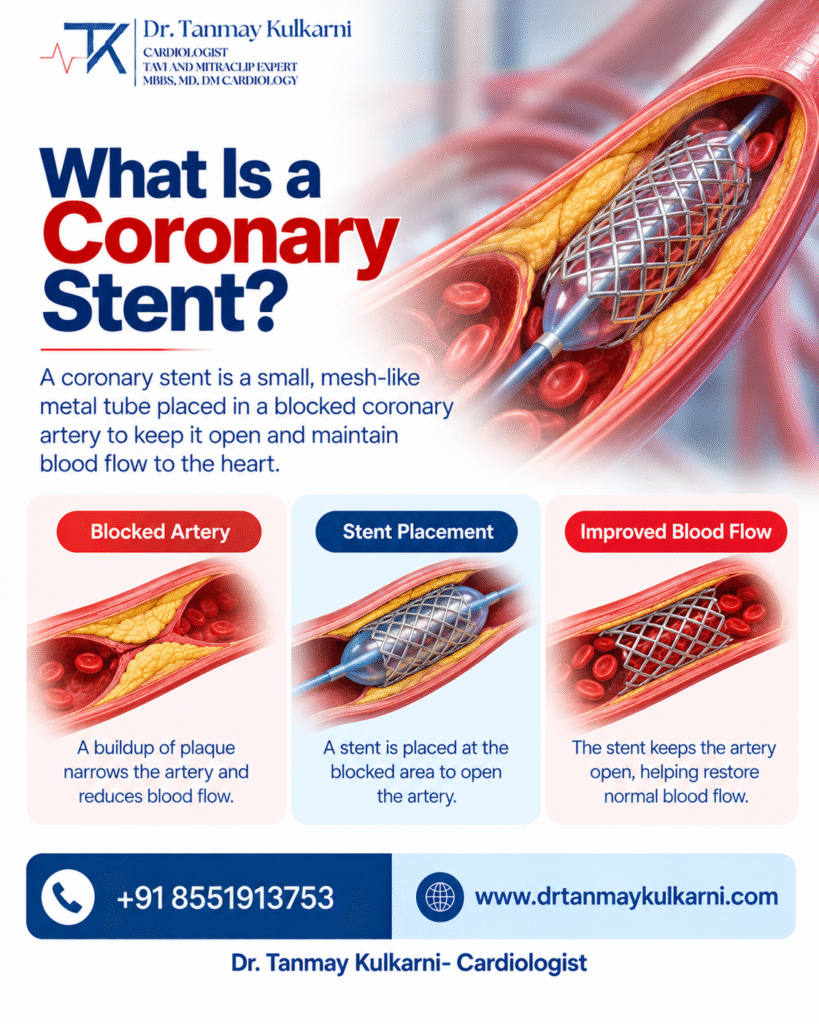
Heart health depends greatly on good blood flow through the coronary arteries. These arteries supply oxygen-rich blood to the heart muscle. When plaque builds up inside an artery, the passageway can become narrowed and blood flow may be reduced. Depending on the severity and location of the narrowing, a cardiologist may recommend medicines, lifestyle measures, further evaluation, or an interventional procedure.
A coronary stent is a small mesh-like tube that is placed inside a narrowed coronary artery during an angioplasty procedure. Its purpose is to help support the treated section of the artery and maintain an open pathway for blood flow.
Why Do Coronary Arteries Become Narrowed?
Coronary artery disease commonly develops when cholesterol, fatty deposits, calcium, and other substances accumulate within the walls of the arteries. This process is called atherosclerosis.
Several factors can contribute to the development or progression of coronary artery disease, including:
- High blood pressure
- High cholesterol
- Diabetes
- Smoking or tobacco use
- Excess body weight
- Physical inactivity
- Increasing age
- Family history of cardiovascular disease
- Other metabolic and lifestyle-related factors
Not every narrowing requires a stent. A cardiologist considers the patient’s symptoms, medical history, investigations, anatomy, and overall cardiovascular risk before recommending treatment.
What Is a Stent Used For?
A stent is generally used during coronary angioplasty when an artery has a narrowing that requires mechanical support after the blockage has been treated.
During angioplasty, a thin catheter is guided through a blood vessel toward the affected coronary artery. A balloon may be used to widen the narrowed area. The stent is then positioned at the treated site and expanded so that it supports the artery.
The exact approach depends on the location and characteristics of the blockage and the patient’s individual condition.
Does Every Heart Blockage Need a Stent?
No. The presence of a blockage does not automatically mean that a stent is required.
Some coronary artery narrowings may be managed with medicines and risk-factor control, particularly when the clinical assessment indicates that an intervention is not necessary. In other situations, an intervention may be appropriate because of symptoms, the severity or location of disease, or other clinical considerations.
This is why treatment should not be decided only by looking at a percentage of blockage. A comprehensive cardiac evaluation helps determine whether medical treatment, angioplasty, stenting, or another approach is appropriate.
How Does Angioplasty and Stenting Work?
Coronary angioplasty is performed using a catheter-based technique. The cardiologist guides the catheter to the affected artery using imaging during the procedure.
A guidewire is carefully passed across the narrowed segment. A balloon may then be inflated to widen the passage. The stent is positioned within the treated area and expanded.
Once appropriately positioned, the stent remains inside the artery to provide structural support.
The procedure is performed in a cardiac catheterization laboratory, with the patient monitored throughout the intervention.
What Are Drug-Eluting Stents?
Modern coronary interventions commonly use drug-eluting stents. These stents have a coating that releases medication locally over time.
The medication is designed to reduce the likelihood of excessive tissue growth within the treated area. The choice of stent and treatment strategy depends on the patient’s coronary anatomy and clinical circumstances.
Patients who receive a stent are generally prescribed antiplatelet medicines according to their cardiologist’s recommendations. These medicines are important for reducing the risk of clot formation within the treated area.
Patients should not stop prescribed antiplatelet medication without discussing it with their treating doctor.
How Is the Need for Stenting Evaluated?
Before recommending an intervention, a cardiologist may review symptoms such as chest discomfort, breathlessness, reduced exercise tolerance, or other concerns.
Depending on the situation, investigations may include an ECG, echocardiography, stress testing, coronary CT, or coronary angiography.
In selected cases, advanced intracoronary imaging techniques such as IVUS or OCT may provide additional information about the artery and plaque characteristics. These technologies can assist the interventional cardiologist in making more informed treatment decisions.
What Happens After Stent Placement?
Recovery varies depending on the individual’s condition and the type of procedure performed.
Patients are generally given instructions regarding medicines, physical activity, wound care, diet, and follow-up. Long-term management is also important because placing a stent treats a particular narrowed segment but does not eliminate the underlying tendency toward coronary artery disease.
Controlling blood pressure, cholesterol, blood sugar, body weight, and tobacco exposure can form an important part of ongoing cardiovascular care.
Regular follow-up helps the cardiologist monitor progress and adjust treatment when necessary.
Can a Stent Prevent Future Heart Problems?
A stent can help restore or support blood flow through a treated coronary artery when an intervention is clinically indicated. However, it should not be viewed as a complete solution for all aspects of coronary artery disease.
Long-term heart health also depends on managing cardiovascular risk factors and following the treatment plan recommended by the medical team.
A heart-healthy lifestyle can include regular physical activity appropriate to the individual’s condition, balanced nutrition, adequate sleep, avoidance of tobacco, and proper management of conditions such as diabetes, hypertension, and high cholesterol.
When Should You Consult a Cardiologist?
New or persistent chest discomfort, unexplained breathlessness, palpitations, dizziness, reduced exercise tolerance, or other concerning symptoms should be medically evaluated.
Sudden or severe chest pressure, especially when accompanied by breathlessness, sweating, nausea, fainting, or discomfort spreading to the arm, jaw, back, or shoulder, may require urgent medical attention.
Dr. Tanmay S. Kulkarni is a Consultant Cardiologist providing cardiac evaluation and interventional cardiology care in Pune. His clinical expertise includes coronary interventions, structural heart procedures, TAVI, MitraClip, and advanced cardiac imaging.
Patients in Baner, Pune seeking evaluation for coronary artery disease can discuss their symptoms and available treatment options with Dr. Tanmay S. Kulkarni. Treatment decisions are individualized after appropriate clinical assessment and investigations.