
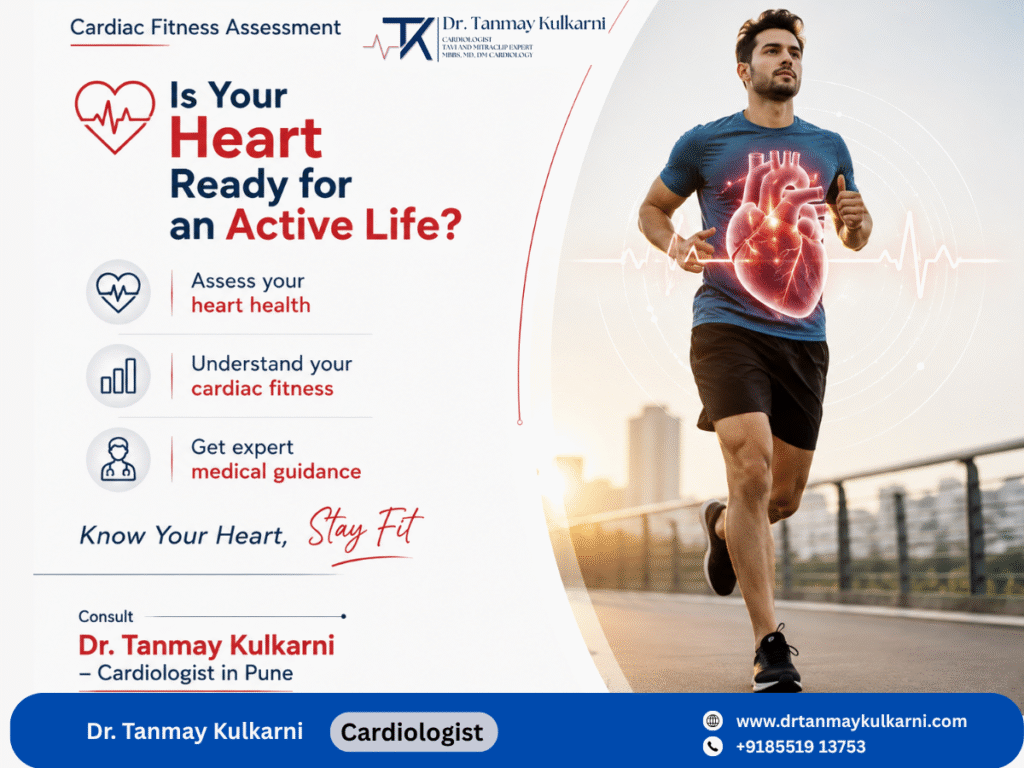
Maintaining an active lifestyle is one of the important ways to support overall well-being, but understanding your heart health is equally essential. Whether you enjoy walking, running, cycling, playing sports, or simply want to stay physically active, knowing how your heart responds to exercise can help you make informed decisions about your fitness routine.
A cardiac fitness assessment is an important part of understanding how your cardiovascular system responds to physical activity. It can provide valuable information about heart function, exercise tolerance, and other factors that may be relevant when planning or continuing an active lifestyle.
For individuals seeking professional cardiac guidance, Dr. Tanmay S Kulkarni provides personalized evaluation and advice based on an individual’s health history, symptoms, lifestyle, and clinical requirements.
Why Understanding Your Heart Health Matters
The heart works continuously to supply oxygen-rich blood throughout the body. During physical activity, the body’s demand for oxygen increases, and the heart responds by working harder to meet these needs.
Regular exercise may support cardiovascular wellness, but every individual has different health conditions, fitness levels, and medical histories. Factors such as age, blood pressure, cholesterol levels, diabetes, family history, smoking, previous cardiac concerns, and lifestyle habits can influence cardiovascular health.
This is why a heart health assessment can be helpful in understanding your current health status. Rather than following a one-size-fits-all approach to fitness, appropriate medical guidance can help individuals make better-informed decisions about physical activity.
What Is a Cardiac Fitness Assessment?
A cardiac fitness assessment may involve evaluating different aspects of cardiovascular health. The type of assessment recommended can vary depending on the individual’s age, medical history, symptoms, fitness goals, and other clinical factors.
The evaluation may help a doctor understand:
- How the heart responds to physical activity
- General exercise tolerance
- Existing cardiovascular risk factors
- Whether additional investigations may be appropriate
- Suitable guidance regarding physical activity
A thorough evaluation can help provide a clearer picture of an individual’s cardiac fitness. It is important to remember that the appropriate tests and assessments depend on individual circumstances and should be recommended by a qualified medical professional.
Who May Consider a Heart Assessment?
A heart evaluation may be considered by people with different health and fitness goals. For example, individuals planning to begin a new exercise programme, increase the intensity of physical activity, or return to exercise after a long break may wish to discuss their plans with a medical professional.
People with known cardiovascular risk factors may also benefit from discussing their heart health. These factors can include high blood pressure, diabetes, high cholesterol, obesity, smoking, or a family history of certain heart conditions.
Some individuals may also seek medical advice if they experience symptoms such as unusual breathlessness, chest discomfort, palpitations, dizziness, or reduced exercise tolerance. Such symptoms should be evaluated appropriately rather than being ignored or self-diagnosed.
A consultation allows the doctor to consider the complete health picture and recommend the next steps when necessary.
The Importance of Personalized Cardiac Guidance
Heart health is not the same for everyone. Two people of the same age may have very different medical histories, lifestyles, and cardiovascular risk profiles. This is why personalized cardiac care is important.
During a consultation, a doctor can review relevant health information and discuss appropriate lifestyle measures, investigations, or follow-up based on individual needs. Professional guidance can also help people understand how to approach physical activity responsibly.
For example, someone beginning a fitness journey may require different guidance from a person who regularly participates in endurance sports. Similarly, a person with existing medical conditions may need a different approach compared with someone without known risk factors.
Individualized evaluation helps ensure that recommendations are based on relevant clinical information rather than general assumptions.
Supporting Your Heart Through Healthy Habits
A cardiac assessment can be complemented by healthy lifestyle practices. Depending on individual health needs and medical advice, heart-supportive habits may include:
- Staying physically active at an appropriate level
- Following a balanced and nutritious diet
- Managing stress effectively
- Maintaining a healthy body weight
- Monitoring blood pressure and other relevant health parameters
- Avoiding tobacco use
- Getting adequate sleep
- Attending regular medical check-ups when advised
Small and consistent lifestyle changes can contribute to overall cardiovascular wellness. However, people with medical conditions or concerns should seek professional advice before making major changes to their exercise or health routine.
Consult Dr. Tanmay S Kulkarni for Cardiac Guidance
Taking proactive steps towards understanding your heart health can help you make informed decisions about your lifestyle and fitness. A consultation with Dr. Tanmay S Kulkarni can provide an opportunity to discuss your health concerns, physical activity goals, and relevant cardiovascular risk factors.
If you are looking for a Heart specialist in Pune, professional evaluation can help you better understand the appropriate approach to your individual cardiac health needs.
Remember, maintaining an active lifestyle and paying attention to your heart health can go hand in hand. The right information, regular monitoring when appropriate, and professional medical guidance can support better awareness of your cardiovascular well-being.
Know Your Heart, Stay Fit.