
Heart diseases are one of the leading health concerns today, affecting people across all age groups. Early diagnosis and timely treatment are crucial to prevent serious complications like heart attacks or heart failure. One of the most effective diagnostic and treatment procedures used in modern cardiology is cardiac catheterization. If you are looking for a trusted Cardiologist in Pune or a reliable Heart Specialist in Pune, understanding this procedure can help you make informed decisions about your heart health.
This guide by Dr. Tanmay S Kulkarni, Cardiologist in Pune will help you understand what cardiac catheterization is, why it is performed, and how it can benefit patients with heart conditions.
What is Cardiac Catheterization?
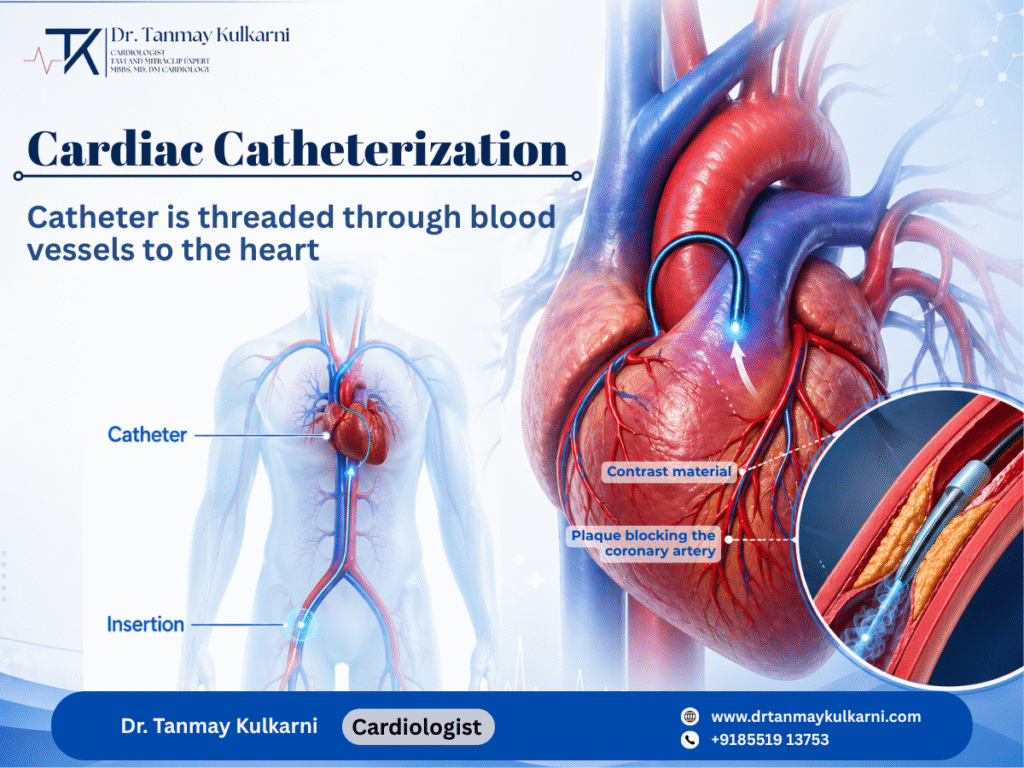
Cardiac catheterization is a minimally invasive medical procedure used to diagnose and treat certain heart conditions. In this procedure, a thin, flexible tube called a catheter is inserted into a blood vessel—usually from the wrist or groin—and carefully guided to the heart.
Once the catheter reaches the heart, it allows doctors to:
- Measure blood pressure inside the heart chambers
- Check oxygen levels
- Detect blockages in coronary arteries
- Evaluate how well the heart is functioning
In many cases, cardiac catheterization is combined with coronary angiography, where a special contrast dye is injected to visualize blood flow in the arteries.
Why is Cardiac Catheterization Needed?
A skilled Heart Specialist in Pune like Dr. Tanmay S Kulkarni may recommend this procedure if you experience symptoms such as:
- Chest pain or discomfort (angina)
- Shortness of breath
- Abnormal ECG or stress test results
- Suspected coronary artery disease
- History of heart attack
Cardiac catheterization helps in identifying blocked or narrowed arteries caused by plaque buildup. It also assists in planning further treatment, such as angioplasty or stent placement.
How is the Procedure Performed?
The procedure is usually done in a specialized cardiac lab and typically takes 30 minutes to an hour.
- Preparation: The patient is given local anesthesia at the insertion site.
- Insertion: A catheter is inserted into a blood vessel in the wrist or groin.
- Navigation: Using advanced imaging techniques, the catheter is guided to the heart.
- Diagnosis: Contrast dye is injected to highlight any blockages or abnormalities.
- Treatment (if required): If a blockage is detected, procedures like angioplasty or stenting can be performed immediately.
This minimally invasive approach reduces recovery time and improves patient outcomes significantly.
Benefits of Cardiac Catheterization
Choosing an experienced Cardiologist in Pune ensures safe and effective results. Some major benefits of cardiac catheterization include:
- Accurate diagnosis of heart conditions
- Early detection of coronary artery disease
- Immediate treatment during the same procedure
- Less invasive compared to open-heart surgery
- Faster recovery and shorter hospital stay
Patients treated by Dr. Tanmay S Kulkarni, Cardiologist in Pune benefit from advanced techniques and personalized care, ensuring the best possible outcomes.
Risks and Safety
While cardiac catheterization is generally safe, like any medical procedure, it carries minimal risks such as:
- Bleeding or bruising at the insertion site
- Allergic reaction to contrast dye
- Rare complications like infection or arrhythmia
However, under the supervision of a skilled Heart Specialist in Pune, these risks are minimized, and the procedure is performed with high safety standards.
Recovery After the Procedure
Recovery after cardiac catheterization is usually quick. Most patients can go home the same day or within 24 hours.
Post-procedure care includes:
- Avoiding heavy activities for a few days
- Drinking plenty of fluids to flush out the dye
- Monitoring the insertion site for swelling or pain
- Following prescribed medications
Your cardiologist will provide personalized guidance based on your condition.
When Should You Consult a Cardiologist?
If you experience symptoms like chest pain, fatigue, dizziness, or irregular heartbeat, do not ignore them. Early consultation with a qualified Cardiologist in Pune can help detect problems before they become serious.
Regular heart check-ups are especially important if you have:
- High blood pressure
- Diabetes
- High cholesterol
- Family history of heart disease
Expert Cardiac Care in Pune
When it comes to heart health, choosing the right specialist makes all the difference. Dr. Tanmay S Kulkarni, Cardiologist in Pune is known for his expertise in advanced cardiac procedures, including cardiac catheterization, angioplasty, and structural heart interventions like TAVI and MitraClip.
With a patient-centric approach and state-of-the-art technology, Dr. Kulkarni ensures accurate diagnosis, effective treatment, and compassionate care for every patient.
Conclusion
Cardiac catheterization is a powerful tool in modern cardiology that helps diagnose and treat heart conditions with precision and minimal invasiveness. If you are experiencing symptoms or are at risk of heart disease, timely evaluation is essential.
Consult Dr. Tanmay S Kulkarni, Cardiologist in Pune—a trusted Heart Specialist in Pune—to receive expert guidance and advanced treatment options for a healthier heart and better life.