
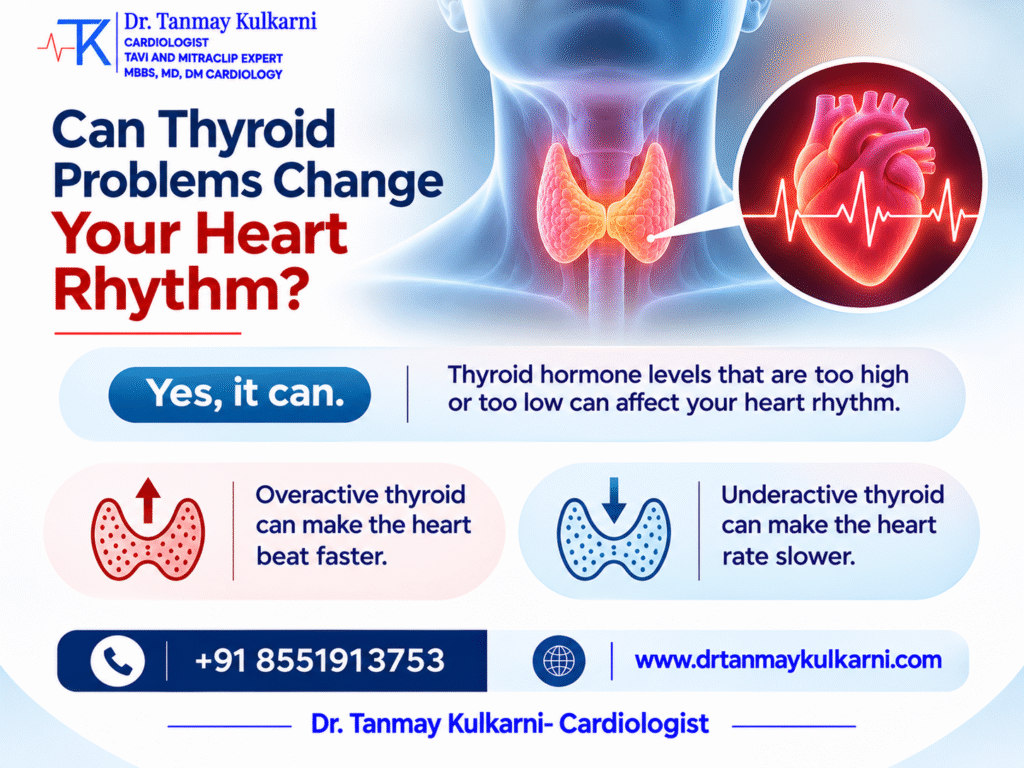
The thyroid gland may be small, but the hormones it produces influence several important functions throughout the body, including heart rate and cardiovascular activity. When thyroid hormone levels become too high or too low, changes in the heartbeat can sometimes occur.
This connection is important because symptoms such as a racing heartbeat, palpitations, unusual tiredness or changes in exercise tolerance may have several possible causes. Thyroid-related changes are one factor that a healthcare professional may consider when evaluating these symptoms.
Dr. Tanmay S. Kulkarni, Cardiologist in Pune, takes a comprehensive approach to cardiac evaluation, considering symptoms, medical history, risk factors and appropriate investigations rather than relying on a single symptom or test.
How Does the Thyroid Affect the Heart?
Thyroid hormones influence the body’s metabolism and can also affect the cardiovascular system. They can influence how quickly the heart beats, how strongly it contracts and how the body responds to signals that regulate cardiovascular activity.
When thyroid hormone levels are outside the usual range, these effects may become noticeable.
An overactive thyroid, known as hyperthyroidism, may cause the heart to beat faster. Some people may notice palpitations, a pounding heartbeat or increased awareness of their pulse.
An underactive thyroid, or hypothyroidism, may have different effects. Some people can experience a slower heart rate, fatigue or reduced exercise tolerance.
These effects do not occur in exactly the same way in every person. Symptoms also overlap with many other cardiovascular and non-cardiovascular conditions.
Can an Overactive Thyroid Cause Palpitations?
Yes, excess thyroid hormone can contribute to an increased heart rate and palpitations.
A person may describe this as a feeling that the heart is racing, pounding or beating unusually strongly. Some people may notice the sensation during activity, while others may experience it even when resting.
In some cases, thyroid-related changes can also influence the heart’s rhythm. This is particularly relevant when someone develops persistent or irregular palpitations.
However, experiencing a fast heartbeat does not automatically mean that the thyroid is responsible. Stress, anxiety, dehydration, fever, caffeine, medications, anaemia and several heart conditions can also affect heart rate.
This is why identifying the underlying cause is more useful than assuming that every episode of palpitations has the same explanation.
What Happens When the Thyroid Is Underactive?
An underactive thyroid can produce a different pattern of symptoms. Some individuals may experience a slower heartbeat, tiredness, reduced energy or difficulty tolerating physical activity.
These symptoms can be subtle and may develop gradually.
Not everyone with hypothyroidism will experience noticeable cardiac symptoms. The overall clinical picture, including thyroid function and cardiovascular health, determines whether further cardiac assessment is necessary.
When Should You Consider a Heart Evaluation?
A change in heartbeat deserves attention when it is persistent, recurrent, unusually intense or associated with other symptoms.
Consider discussing your symptoms with a healthcare professional if you experience:
- Frequent or persistent palpitations
- A noticeably irregular heartbeat
- Unexplained breathlessness
- Dizziness or light-headedness
- Reduced exercise tolerance
- Unusual fatigue
- Chest discomfort
- Episodes of rapid heartbeat without an obvious trigger
Sudden or severe chest discomfort, significant difficulty breathing, fainting or other concerning symptoms require prompt medical attention.
How Is the Cause Evaluated?
A detailed assessment generally begins with understanding the patient’s symptoms. Important details include when the heartbeat changes occur, how long episodes last, whether they happen during activity or rest and whether other symptoms occur at the same time.
A clinician may review medications, caffeine intake, existing medical conditions, family history and cardiovascular risk factors.
Depending on the situation, investigations may include an ECG, which records the heart’s electrical activity. If symptoms occur intermittently, longer-term rhythm monitoring may sometimes provide additional information.
Thyroid blood tests can help determine whether thyroid hormone levels are contributing to the symptoms.
An Echocardiogram may be considered when there is a reason to evaluate heart structure and function.
The appropriate investigations depend on the individual rather than being identical for everyone experiencing palpitations.
Can Treating the Thyroid Help Heart-Related Symptoms?
When thyroid dysfunction is contributing to cardiovascular symptoms, appropriate management of the underlying thyroid condition may help improve those symptoms.
The treatment plan depends on whether the thyroid is overactive, underactive or affected by another thyroid-related condition.
Importantly, heart symptoms should not simply be attributed to thyroid disease without appropriate evaluation. A person can have thyroid dysfunction and a separate cardiac condition at the same time.
A coordinated approach may therefore be useful when symptoms involve both thyroid and cardiovascular health.
Why Individualised Assessment Matters
Heart rhythm changes can have many causes. Two people with similar symptoms may require completely different evaluations depending on their age, medical history, medications, risk factors and clinical findings.
This is why a structured assessment is valuable. Rather than focusing only on whether the heartbeat is fast or slow, the goal is to understand why the change is occurring and whether it has any clinical significance.
Relevant Heart Rhythm Evaluation, ECG Testing, Cardiac Monitoring and Echocardiography may form part of the assessment when clinically appropriate.
Supporting Long-Term Heart Health
Managing cardiovascular risk factors remains important even when thyroid dysfunction is present. Maintaining appropriate physical activity, following a balanced diet, avoiding tobacco and taking prescribed medicines as directed can support overall cardiovascular health.
People receiving treatment for thyroid disease should also follow their treating doctor’s advice regarding thyroid monitoring and medication.
Most importantly, recurring or unexplained changes in heart rhythm should not be self-diagnosed. A proper medical evaluation can help distinguish temporary changes from symptoms that require further investigation.
Thyroid and Heart Rhythm: The Bigger Picture
The relationship between thyroid function and the cardiovascular system shows why heart symptoms should be considered in their broader medical context. Both excess and insufficient thyroid hormone can influence heart rate, but the effect varies from person to person.
Dr. Tanmay S. Kulkarni focuses on understanding the complete clinical picture when evaluating cardiac symptoms. His Google Business Profile is listed as Dr. Tanmay S. Kulkarni.
If you notice persistent palpitations, an unusual change in your usual heartbeat or associated symptoms, discussing them with a qualified healthcare professional can help determine whether cardiac, thyroid-related or another underlying factor may be involved.
Early and appropriate evaluation can provide clarity and help guide the next steps in care.