
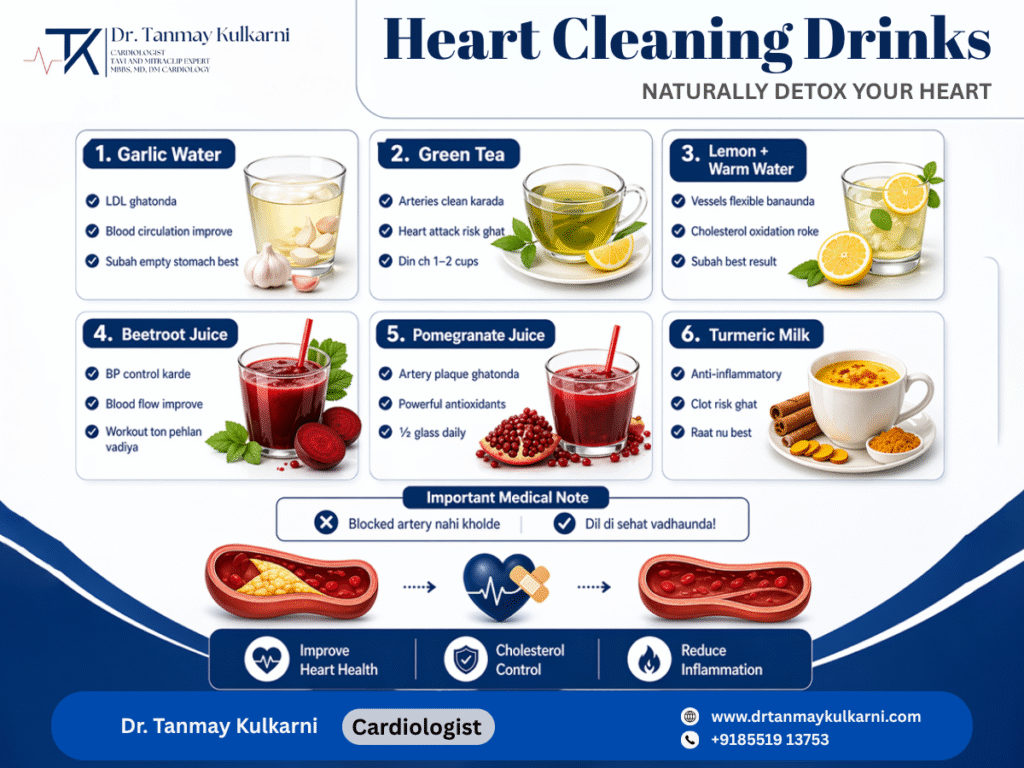
Social media is filled with claims about “heart-cleaning drinks” and natural ways to detox the arteries. Garlic water, green tea, lemon water, beetroot juice, pomegranate juice and turmeric milk are frequently promoted as solutions for cholesterol or blocked arteries.
But can a drink actually clean the heart or remove an arterial blockage?
The simple answer is no. No food or beverage can physically wash away or instantly dissolve plaque from the coronary arteries. However, some beverages can be part of a balanced diet that supports cardiovascular health, particularly when combined with regular physical activity, healthy weight management, good sleep and appropriate medical care.
For people looking for a Heart specialist in Pune, understanding the difference between evidence-based heart care and online “detox” claims is an important first step toward making safer health decisions.
1. Garlic Water: Helpful Food, Not an Artery Cleaner
Garlic is commonly included in Indian diets and contains several naturally occurring compounds. Research has explored its possible relationship with blood pressure and cholesterol levels, but garlic water should not be considered a treatment for heart disease.
Including garlic as part of a balanced diet may contribute to overall heart-healthy nutrition, but it cannot replace cholesterol-lowering medicines or other treatment prescribed by a cardiologist.
People taking blood-thinning medicines or those with medical conditions should also discuss concentrated garlic supplements with their doctor.
2. Green Tea and Heart Health
Green tea contains polyphenols and other antioxidants. When consumed without excessive sugar, it can be a reasonable beverage choice as part of a healthy diet.
Rather than thinking of green tea as something that “cleans arteries,” consider it one small component of an overall heart-healthy lifestyle.
The bigger picture matters more: reducing tobacco exposure, staying physically active, managing blood pressure and diabetes, and following a balanced diet generally have a much greater role in cardiovascular risk management.
3. Lemon and Warm Water
Warm lemon water is refreshing and can help people maintain adequate hydration. Lemon also provides vitamin C and other nutrients.
However, there is no need to rely on lemon water as a “detox” treatment. The human body already has organs, particularly the liver and kidneys, that continuously perform important metabolic and waste-removal functions.
Lemon water does not dissolve coronary artery plaque. If you enjoy it, consume it as part of a balanced routine rather than as a substitute for medical treatment.
4. Beetroot Juice
Beetroot is naturally rich in dietary nitrates. These compounds can be converted into nitric oxide in the body, which plays a role in blood vessel function.
For some people, beetroot and beetroot juice can fit into a heart-friendly diet. However, portion size matters, especially when consuming juice rather than whole vegetables.
Patients with diabetes, kidney disease, low blood pressure or other medical conditions should ask their healthcare professional whether regularly consuming concentrated juices is appropriate for them.
5. Pomegranate Juice
Pomegranate contains naturally occurring polyphenols and antioxidants. It can be included in a varied, balanced diet, but claims that pomegranate juice directly removes arterial plaque are misleading.
Whole fruit may often be preferable because it provides dietary fibre in addition to nutrients. If choosing juice, portion control and avoiding products with excessive added sugar are sensible considerations.
Remember that cholesterol management depends on overall dietary patterns, physical activity, genetics, medical conditions and, for some patients, medication.
6. Turmeric Milk
Turmeric contains curcumin, a compound studied for its anti-inflammatory properties. Turmeric is widely used in Indian cooking and can comfortably form part of a balanced diet.
A cup of turmeric milk may be enjoyable, but it should not be presented as a treatment for blood clots, coronary blockages or heart disease.
People taking anticoagulants or other medications should discuss regular use of concentrated turmeric or curcumin supplements with their healthcare provider.
Can These Drinks Open a Blocked Artery?
This is the most important point: heart-healthy drinks do not open blocked coronary arteries.
Plaque develops gradually within artery walls and may contain cholesterol, inflammatory cells, calcium and other substances. Appropriate treatment depends on the severity of the disease, symptoms and individual cardiovascular risk.
Management may include lifestyle modification, medicines for cholesterol, blood pressure or other risk factors, and in selected cases procedures such as coronary angioplasty or other cardiac interventions.
That is why chest pain, breathlessness or other concerning symptoms should never be managed only with home remedies.
What Actually Helps Protect Your Heart?
Instead of searching for one miracle drink, focus on habits that support long-term cardiovascular health. A balanced diet containing vegetables, fruits, whole grains, legumes, nuts and appropriate sources of protein is a good foundation.
Regular physical activity, maintaining a healthy weight, avoiding smoking and tobacco, getting adequate sleep, and controlling high blood pressure, diabetes and cholesterol are also important.
If you already have cardiovascular disease, follow the treatment plan recommended by your doctor. Do not stop prescribed medication because a natural remedy or drink is promoted online.
When Should You Consult a Cardiologist?
Consider medical evaluation if you experience chest discomfort, unexplained breathlessness, palpitations, dizziness, fainting, reduced exercise tolerance or symptoms that repeatedly occur during physical activity.
People with diabetes, hypertension, high cholesterol, obesity, smoking history or a strong family history of cardiovascular disease may also benefit from individualized cardiac risk assessment.
For professional cardiac consultation, patients can find the Google Business Profile Dr. Tanmay S Kulkarni, Cardiologist in Pune, TAVR, Mitra Clip Specialist,TAVI Expert in Maharashtra for clinic information and appointment details.
Final Takeaway
Garlic water, green tea, lemon water, beetroot juice, pomegranate juice and turmeric milk can all have a place in a balanced diet when appropriate for the individual. But none should be marketed or considered as a drink that “cleans” the heart or removes blocked arteries.
Think of heart health as the result of consistent daily choices rather than a quick detox. Good nutrition, regular activity, risk-factor control, appropriate screening and evidence-based medical care provide a much stronger foundation for protecting your heart.