
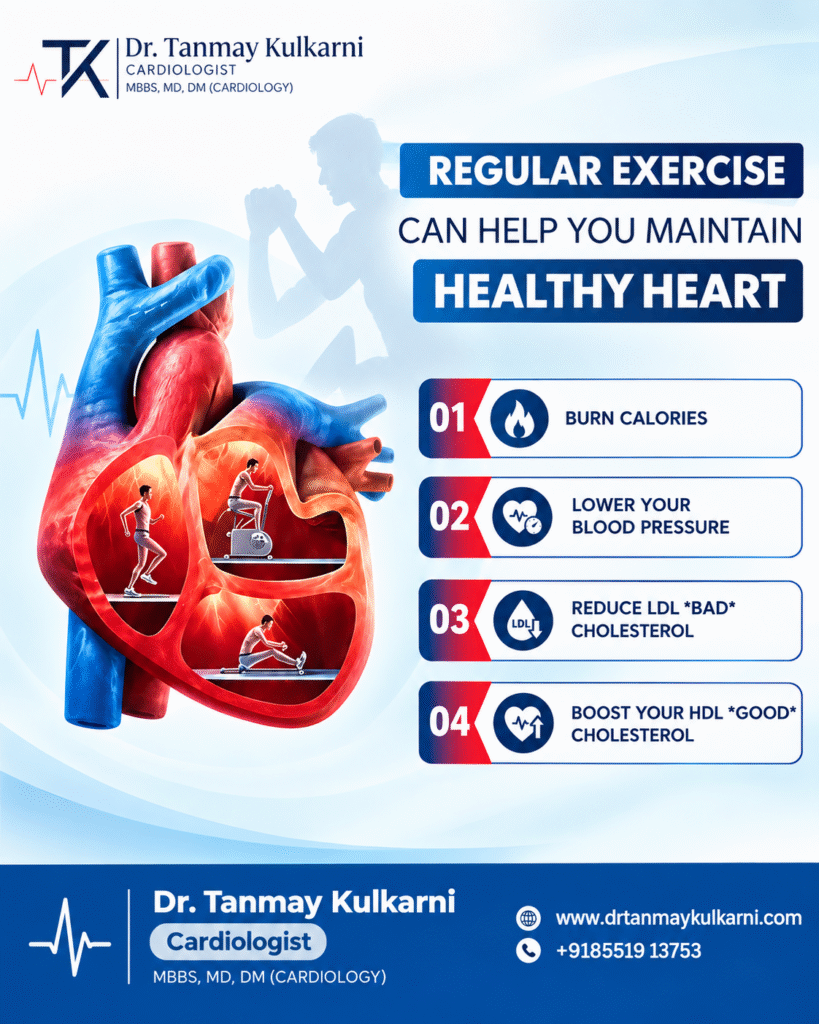
Your heart works continuously to deliver oxygen-rich blood throughout your body. Like many aspects of physical health, cardiovascular function can benefit from regular physical activity. Exercise is not simply about losing weight or building muscle; it can also play an important role in supporting blood pressure, cholesterol, blood sugar, circulation, and overall cardiovascular fitness.
For individuals looking for a Cardiologist in Pune, Dr. Tanmay S Kulkarni provides evaluation and guidance for a range of cardiovascular concerns, including high blood pressure, cholesterol problems, coronary artery disease, and preventive heart care.
Understanding how physical activity affects the cardiovascular system can help people make informed decisions about incorporating movement into their everyday routines.
How Does Exercise Help Your Heart?
During physical activity, your muscles require more oxygen. The heart responds by pumping more blood to meet this increased demand. With regular aerobic activity, the cardiovascular system can become more efficient.
Consistent exercise can improve cardiorespiratory fitness and contribute to better overall physical functioning. Physical activity is also associated with a lower risk of cardiovascular disease when combined with other healthy lifestyle measures.
You do not necessarily need intense workouts to become more active. Walking, cycling, swimming, dancing, and other forms of aerobic activity can all contribute to weekly physical activity.
Exercise and Blood Pressure
High blood pressure is an important modifiable risk factor for cardiovascular disease. Because hypertension often produces no obvious symptoms, regular monitoring is important.
Physical activity can form part of a broader blood pressure management strategy. Aerobic exercise and appropriate resistance training can help improve cardiovascular fitness and may contribute to lowering blood pressure over time.
Exercise, however, should complement rather than replace prescribed treatment. People already taking medicines for hypertension should continue them according to their doctor’s instructions unless their treatment plan is medically changed.
Exercise Can Support Healthy Cholesterol Levels
Cholesterol is essential for normal body functions, but abnormal levels of certain blood lipids can contribute to cardiovascular risk.
Low-density lipoprotein, commonly called LDL cholesterol, can contribute to plaque accumulation within arteries when levels are elevated. High-density lipoprotein, or HDL cholesterol, helps transport cholesterol in the bloodstream.
Regular physical activity can contribute to a healthier lipid profile, particularly when combined with a balanced diet, appropriate body-weight management, avoidance of tobacco, and prescribed medicines when required.
Rather than focusing on a single cholesterol number, cardiovascular risk should be assessed using the overall clinical picture.
Physical Activity and Weight Management
Body weight is influenced by many factors, including calorie intake, physical activity, sleep, medications, genetics, and underlying medical conditions.
Exercise increases energy expenditure and can support healthy weight management, particularly when combined with appropriate nutrition. Maintaining a suitable weight can also benefit blood pressure, blood sugar, mobility, and overall metabolic health.
Importantly, cardiovascular benefits from physical activity can occur even when there is no dramatic change on the weighing scale. Improving fitness itself is a meaningful health goal.
How Much Exercise Should Adults Get?
For general health, widely used physical activity recommendations encourage adults to work toward approximately 150 minutes of moderate-intensity aerobic activity per week, or around 75 minutes of vigorous-intensity activity, along with muscle-strengthening activities on at least two days each week.
The activity can be distributed throughout the week rather than completed all at once.
Someone who has been inactive should not feel pressured to reach these targets immediately. Starting gradually with manageable activities and progressively increasing duration and intensity can make exercise more sustainable.
Even reducing prolonged sitting and adding more movement to the day can be a useful starting point.
Which Exercises Are Good for Cardiovascular Fitness?
Several types of physical activity can support heart health.
Brisk walking is one of the most accessible options. Cycling, swimming, jogging, dancing, and certain recreational sports can also provide aerobic exercise. Strength training can complement aerobic activity by supporting muscle strength and overall physical function.
The best exercise programme is one that is safe, appropriate for your health status, and realistic enough to continue consistently.
Warm-ups and cool-downs can also help the body transition gradually into and out of more demanding activity.
Should Heart Patients Exercise?
Having a cardiovascular condition does not automatically mean exercise should be avoided. In many cases, appropriately prescribed physical activity is an important component of cardiovascular care.
However, the appropriate intensity can differ substantially between individuals.
People with coronary artery disease, heart failure, rhythm disorders, previous heart attack, heart surgery, uncontrolled hypertension, or other significant medical conditions should discuss their exercise plans with their healthcare professional.
Some patients may benefit from a structured cardiac rehabilitation programme, particularly after certain cardiovascular events or procedures.
Know the Warning Signs During Exercise
Physical activity should not mean ignoring unusual symptoms.
Stop exercising and seek appropriate medical attention if you develop new or significant chest pain or pressure, severe or unusual breathlessness, fainting, marked dizziness, or other concerning symptoms.
Palpitations that are new, persistent, or accompanied by dizziness, chest discomfort, or fainting also deserve medical assessment.
People experiencing possible symptoms of a heart attack should seek emergency medical assistance rather than attempting to exercise through the discomfort.
Exercise Is Only One Part of Heart-Healthy Living
Regular movement is valuable, but cardiovascular prevention involves more than exercise alone.
A comprehensive approach can include a balanced diet, adequate sleep, tobacco avoidance, management of stress, and regular monitoring of blood pressure, cholesterol, and blood glucose when appropriate.
People with diabetes, hypertension, high cholesterol, obesity, or a family history of premature cardiovascular disease may benefit from individual assessment of their overall cardiovascular risk.
Heart Health Guidance With Dr. Tanmay S Kulkarni
Building an active lifestyle does not require becoming an athlete. Small and consistent improvements—such as walking more frequently, reducing prolonged sitting, and gradually increasing structured exercise—can contribute to long-term cardiovascular wellness.
The Google Business Profile Dr. Tanmay S Kulkarni provides information for patients seeking consultation for preventive cardiology, hypertension, cholesterol management, coronary artery disease, and other heart-related concerns in Pune.
Before beginning a demanding exercise programme, particularly if you have known cardiovascular disease, significant risk factors, or symptoms during activity, consider discussing your plans with your doctor. An individualised approach can help determine an appropriate level of physical activity for your health and fitness.
This article is for general educational purposes and is not a substitute for personalised medical diagnosis or treatment.