
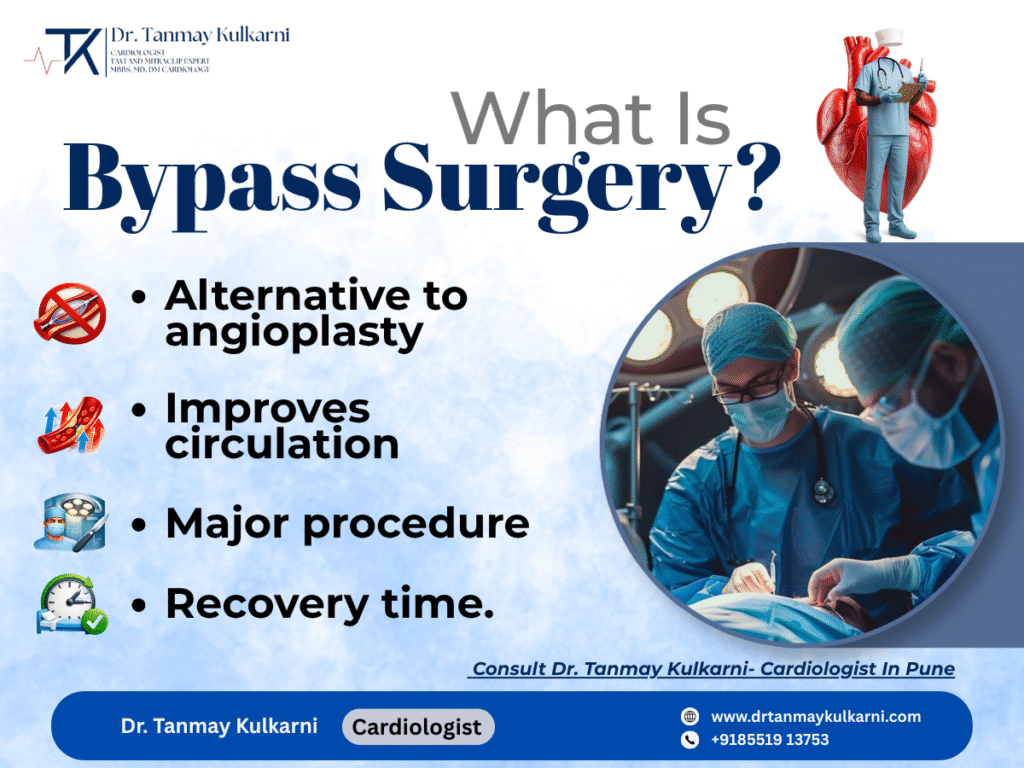
Heart health is one of the most important aspects of overall well-being, yet many people ignore early warning signs until the condition becomes serious. One such advanced treatment for severe heart disease is bypass surgery, also known as Coronary Artery Bypass Grafting (CABG). If you or your loved ones have been advised this procedure, understanding it clearly can help reduce anxiety and make informed decisions.
This blog by Dr. Tanmay S Kulkarni, Cardiologist in Pune, aims to explain bypass surgery in a simple, easy-to-understand, and SEO-friendly way while helping patients connect with the right heart specialist in Pune.
What Is Bypass Surgery?
Bypass surgery is a major heart procedure performed to improve blood flow to the heart. It is recommended when the coronary arteries (the blood vessels supplying oxygen-rich blood to the heart muscle) become narrowed or blocked due to plaque buildup.
During the procedure, a surgeon takes a healthy blood vessel from another part of the body (usually the leg, chest, or arm) and creates a new pathway (bypass) around the blocked artery. This allows blood to flow freely to the heart muscle again.
Why Is Bypass Surgery Needed?
Bypass surgery is usually advised when:
- There are multiple blockages in coronary arteries
- The blockage is severe and cannot be treated with angioplasty
- The patient has diabetes along with heart disease
- There is reduced heart function due to poor blood supply
While angioplasty (stent placement) is a less invasive option, bypass surgery is often a more effective and long-term solution for complex cases.
If you are searching for a trusted heart specialist in Pune, consulting Dr. Tanmay S Kulkarni, Cardiologist in Pune can help determine the best treatment option based on your condition.
Bypass Surgery vs Angioplasty
Many patients are confused between bypass surgery and angioplasty. Here’s a simple comparison:
Angioplasty:
- Minimally invasive procedure
- Uses stents to open blocked arteries
- Short recovery time
- Suitable for fewer or less complex blockages
Bypass Surgery:
- Major surgical procedure
- Creates a new route for blood flow
- Longer recovery but more durable results
- Recommended for multiple or severe blockages
Your cardiologist will suggest the most suitable treatment after evaluating your reports and overall health condition.
How Does Bypass Surgery Improve Circulation?
The main goal of bypass surgery is to restore proper blood flow to the heart. When arteries are blocked, the heart muscle doesn’t receive enough oxygen, leading to chest pain (angina), fatigue, or even heart attacks.
By creating a new pathway for blood, bypass surgery:
- Reduces chest pain
- Improves heart function
- Enhances physical activity levels
- Lowers the risk of heart attacks
Patients often notice a significant improvement in their quality of life after recovery.
Is Bypass Surgery a Major Procedure?
Yes, bypass surgery is considered a major operation. It is performed under general anesthesia and may take several hours depending on the number of blockages.
The procedure involves:
- Opening the chest (in most cases)
- Temporarily stopping the heart (in some techniques)
- Using a heart-lung machine to maintain circulation
However, with advancements in medical technology and experienced surgeons, the success rate of bypass surgery has significantly improved.
If you are looking for expert guidance, Dr. Tanmay S Kulkarni, Cardiologist in Pune provides comprehensive evaluation and pre-surgical counseling to ensure the best outcomes.
Recovery After Bypass Surgery
Recovery is an important part of the healing process. While it may take time, most patients gradually return to their normal lifestyle.
Typical recovery timeline:
- Hospital stay: 5–7 days
- Initial recovery at home: 4–6 weeks
- Full recovery: 8–12 weeks
During recovery, patients are advised to:
- Follow a heart-healthy diet
- Take prescribed medications regularly
- Avoid heavy physical activity initially
- Attend cardiac rehabilitation programs
- Manage stress effectively
Regular follow-ups with your cardiologist are essential for long-term success.
Risks and Safety
Like any major surgery, bypass surgery carries some risks, such as infection, bleeding, or complications related to anesthesia. However, for many patients, the benefits far outweigh the risks, especially when performed at the right time.
Choosing an experienced cardiologist plays a crucial role in minimizing complications. That’s why patients trust Dr. Tanmay S Kulkarni, Cardiologist in Pune, for accurate diagnosis and expert heart care.
Lifestyle Changes After Bypass Surgery
Surgery alone is not enough to ensure long-term heart health. Patients must adopt a healthy lifestyle to prevent further blockages.
Key lifestyle changes include:
- Eating a balanced, low-fat diet
- Regular exercise as advised
- Quitting smoking and limiting alcohol
- Maintaining a healthy weight
- Controlling diabetes, blood pressure, and cholesterol
These changes not only protect your heart but also improve overall well-being.
When Should You Consult a Cardiologist?
Do not ignore symptoms like:
- Chest pain or discomfort
- Shortness of breath
- Fatigue
- Irregular heartbeat
Early diagnosis can prevent complications and may even avoid the need for surgery.
If you are experiencing any of these symptoms, consult Dr. Tanmay S Kulkarni, Cardiologist in Pune, a trusted name for heart care and advanced treatment options.
Conclusion
Bypass surgery is a life-saving procedure that restores proper blood flow to the heart and significantly improves quality of life. While it may sound complex, timely treatment and expert care can lead to excellent outcomes.
If you are searching for a reliable heart specialist in Pune, connect with Dr. Tanmay S Kulkarni, Cardiologist in Pune, for personalized care, accurate diagnosis, and the best treatment approach for your heart health.
Taking the right step today can protect your heart for a healthier tomorrow.