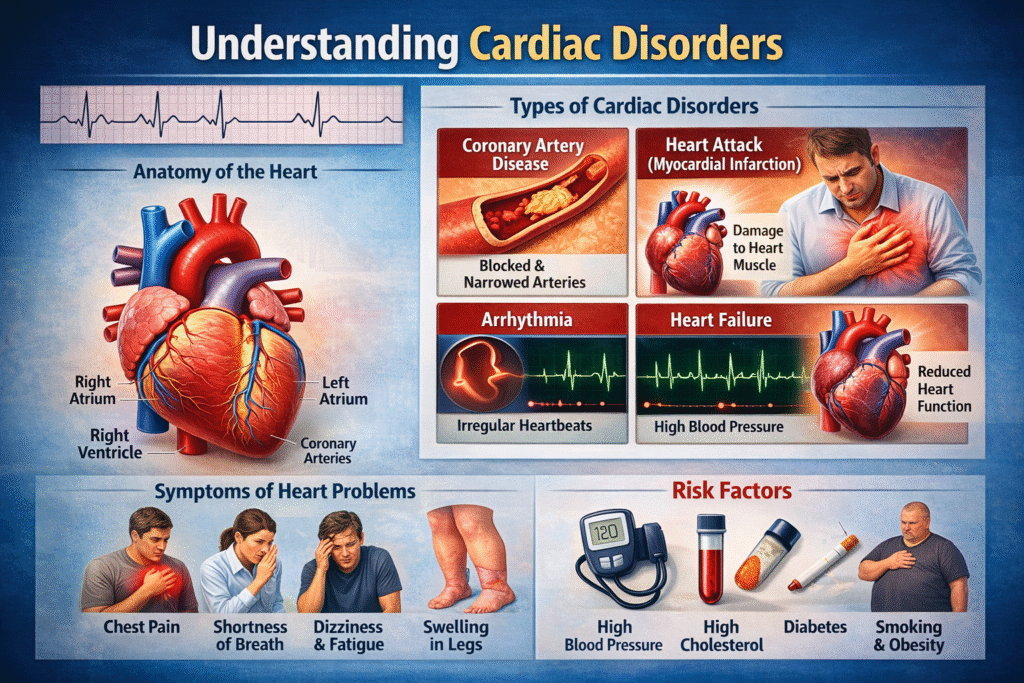
The human heart works tirelessly—beating over 100,000 times a day—to keep us alive and active. Yet, heart-related problems are among the leading causes of illness worldwide. Cardiac disorders can affect people of all ages, often developing silently before showing noticeable symptoms. Understanding these conditions is the first step toward prevention, early diagnosis, and effective treatment.
As a trusted Cardiologist in Baner, Pune, Dr. Tanmay Kulkarni emphasizes the importance of heart health awareness, timely medical consultation, and lifestyle modifications to reduce the risk of serious complications.
What Are Cardiac Disorders?
Cardiac disorders refer to a wide range of conditions that affect the heart’s structure, function, or rhythm. These disorders may involve the heart muscles, valves, arteries, or electrical system. Some conditions are present from birth, while others develop over time due to lifestyle habits, aging, or underlying medical issues.
While some heart conditions cause obvious symptoms like chest pain or breathlessness, others may remain unnoticed until they reach an advanced stage—making regular heart checkups essential.
Common Types of Cardiac Disorders
1. Coronary Artery Disease (CAD)
Coronary artery disease occurs when the blood vessels supplying the heart become narrowed or blocked due to plaque buildup. This reduces blood flow to the heart muscle and can lead to chest pain (angina) or heart attack.
2. Heart Rhythm Disorders (Arrhythmias)
Arrhythmias occur when the heart beats too fast, too slow, or irregularly. Palpitations, dizziness, fatigue, or fainting spells are common symptoms. Some arrhythmias are harmless, while others require immediate medical attention.
3. Heart Failure
Heart failure does not mean the heart has stopped working. It means the heart is unable to pump blood efficiently to meet the body’s needs. Symptoms include swelling in the legs, shortness of breath, and persistent fatigue.
4. Valvular Heart Disease
This condition affects one or more heart valves, disrupting normal blood flow through the heart. Damaged or narrowed valves can lead to breathlessness, chest discomfort, and reduced exercise tolerance.
5. Congenital Heart Disorders
These are structural problems present at birth. Some are detected early in life, while others may go unnoticed until adulthood.
Early Warning Signs You Should Not Ignore
Recognizing symptoms early can save lives. Consult a Cardiologist in Pune if you experience:
- Chest pain or pressure
- Shortness of breath during rest or activity
- Unexplained fatigue
- Rapid or irregular heartbeat
- Swelling in ankles, feet, or abdomen
- Dizziness or fainting
Even mild or occasional symptoms should not be ignored, as heart disease often progresses silently.
Risk Factors for Cardiac Disorders
Several factors increase the risk of developing heart disease, including:
- High blood pressure
- Diabetes
- High cholesterol levels
- Smoking and tobacco use
- Obesity
- Sedentary lifestyle
- Chronic stress
- Family history of heart disease
Managing these risk factors significantly lowers the chances of developing serious cardiac conditions.
How Cardiac Disorders Are Diagnosed
Early diagnosis plays a crucial role in effective treatment. A cardiologist may recommend:
- Electrocardiogram (ECG)
- Echocardiography
- Stress testing
- Blood tests
- CT angiography or coronary angiogram
Dr. Tanmay Kulkarni, an experienced Heart Specialist in Pune, follows a patient-centric approach, ensuring accurate diagnosis and personalized treatment planning.
Treatment Options for Cardiac Disorders
Treatment depends on the type and severity of the condition. It may include:
Lifestyle Modifications
- Heart-healthy diet
- Regular physical activity
- Stress management
- Weight control
- Quitting smoking
Medications
Medications help control blood pressure, cholesterol, heart rhythm, and prevent blood clots.
Interventional Procedures
In some cases, procedures such as angioplasty, stent placement, or valve repair may be required to restore proper blood flow.
Advanced Cardiac Care
With modern advancements, minimally invasive and catheter-based treatments offer faster recovery and improved outcomes.
Preventing Cardiac Disorders: Small Steps, Big Impact
Prevention is always better than cure. Simple daily habits can significantly improve heart health:
- Eat fresh fruits, vegetables, whole grains, and lean proteins
- Limit salt, sugar, and unhealthy fats
- Exercise at least 30 minutes a day
- Get regular health checkups
- Manage stress through meditation or yoga
- Follow medical advice and take prescribed medications regularly
When to Consult a Cardiologist?
If you have risk factors, a family history of heart disease, or experience any symptoms—even mild ones—it is wise to consult a specialist early. Timely evaluation by a skilled Heart Specialist in Pune can prevent complications and ensure long-term heart health.
Expert Heart Care with Dr. Tanmay Kulkarni
Dr. Tanmay Kulkarni is dedicated to providing compassionate, evidence-based cardiac care with a focus on early diagnosis, advanced treatment, and patient education. His approach combines medical expertise with clear communication, helping patients make informed decisions about their heart health.
Final Thoughts
Understanding cardiac disorders empowers you to take control of your heart health. With early detection, lifestyle changes, and expert medical guidance, most heart conditions can be managed effectively—allowing you to lead a healthy, active life.
If you or your loved ones have concerns about heart health, do not delay seeking expert advice from a trusted Cardiologist in Pune.
Understanding Cardiac Disorders: A Complete Guide to Heart Health
The human heart works tirelessly—beating over 100,000 times a day—to keep us alive and active. Yet, heart-related problems are among the leading causes of illness worldwide. Cardiac disorders can affect people of all ages, often developing silently before showing noticeable symptoms. Understanding these conditions is the first step toward prevention, early diagnosis, and effective treatment.
As a trusted Cardiologist in Baner, Pune, Dr. Tanmay Kulkarni emphasizes the importance of heart health awareness, timely medical consultation, and lifestyle modifications to reduce the risk of serious complications.
What Are Cardiac Disorders?
Cardiac disorders refer to a wide range of conditions that affect the heart’s structure, function, or rhythm. These disorders may involve the heart muscles, valves, arteries, or electrical system. Some conditions are present from birth, while others develop over time due to lifestyle habits, aging, or underlying medical issues.
While some heart conditions cause obvious symptoms like chest pain or breathlessness, others may remain unnoticed until they reach an advanced stage—making regular heart checkups essential.
Common Types of Cardiac Disorders
1. Coronary Artery Disease (CAD)
Coronary artery disease occurs when the blood vessels supplying the heart become narrowed or blocked due to plaque buildup. This reduces blood flow to the heart muscle and can lead to chest pain (angina) or heart attack.
2. Heart Rhythm Disorders (Arrhythmias)
Arrhythmias occur when the heart beats too fast, too slow, or irregularly. Palpitations, dizziness, fatigue, or fainting spells are common symptoms. Some arrhythmias are harmless, while others require immediate medical attention.
3. Heart Failure
Heart failure does not mean the heart has stopped working. It means the heart is unable to pump blood efficiently to meet the body’s needs. Symptoms include swelling in the legs, shortness of breath, and persistent fatigue.
4. Valvular Heart Disease
This condition affects one or more heart valves, disrupting normal blood flow through the heart. Damaged or narrowed valves can lead to breathlessness, chest discomfort, and reduced exercise tolerance.
5. Congenital Heart Disorders
These are structural problems present at birth. Some are detected early in life, while others may go unnoticed until adulthood.
Early Warning Signs You Should Not Ignore
Recognizing symptoms early can save lives. Consult a Cardiologist in Pune if you experience:
- Chest pain or pressure
- Shortness of breath during rest or activity
- Unexplained fatigue
- Rapid or irregular heartbeat
- Swelling in ankles, feet, or abdomen
- Dizziness or fainting
Even mild or occasional symptoms should not be ignored, as heart disease often progresses silently.
Risk Factors for Cardiac Disorders
Several factors increase the risk of developing heart disease, including:
- High blood pressure
- Diabetes
- High cholesterol levels
- Smoking and tobacco use
- Obesity
- Sedentary lifestyle
- Chronic stress
- Family history of heart disease
Managing these risk factors significantly lowers the chances of developing serious cardiac conditions.
How Cardiac Disorders Are Diagnosed
Early diagnosis plays a crucial role in effective treatment. A cardiologist may recommend:
- Electrocardiogram (ECG)
- Echocardiography
- Stress testing
- Blood tests
- CT angiography or coronary angiogram
Dr. Tanmay Kulkarni, an experienced Heart Specialist in Pune, follows a patient-centric approach, ensuring accurate diagnosis and personalized treatment planning.
Treatment Options for Cardiac Disorders
Treatment depends on the type and severity of the condition. It may include:
Lifestyle Modifications
- Heart-healthy diet
- Regular physical activity
- Stress management
- Weight control
- Quitting smoking
Medications
Medications help control blood pressure, cholesterol, heart rhythm, and prevent blood clots.
Interventional Procedures
In some cases, procedures such as angioplasty, stent placement, or valve repair may be required to restore proper blood flow.
Advanced Cardiac Care
With modern advancements, minimally invasive and catheter-based treatments offer faster recovery and improved outcomes.
Preventing Cardiac Disorders: Small Steps, Big Impact
Prevention is always better than cure. Simple daily habits can significantly improve heart health:
- Eat fresh fruits, vegetables, whole grains, and lean proteins
- Limit salt, sugar, and unhealthy fats
- Exercise at least 30 minutes a day
- Get regular health checkups
- Manage stress through meditation or yoga
- Follow medical advice and take prescribed medications regularly
When to Consult a Cardiologist?
If you have risk factors, a family history of heart disease, or experience any symptoms—even mild ones—it is wise to consult a specialist early. Timely evaluation by a skilled Heart Specialist in Pune can prevent complications and ensure long-term heart health.
Expert Heart Care with Dr. Tanmay Kulkarni
Dr. Tanmay Kulkarni is dedicated to providing compassionate, evidence-based cardiac care with a focus on early diagnosis, advanced treatment, and patient education. His approach combines medical expertise with clear communication, helping patients make informed decisions about their heart health.
Final Thoughts
Understanding cardiac disorders empowers you to take control of your heart health. With early detection, lifestyle changes, and expert medical guidance, most heart conditions can be managed effectively—allowing you to lead a healthy, active life.
If you or your loved ones have concerns about heart health, do not delay seeking expert advice from a trusted Cardiologist in Pune.
Understanding Cardiac Disorders: A Complete Guide to Heart Health
The human heart works tirelessly—beating over 100,000 times a day—to keep us alive and active. Yet, heart-related problems are among the leading causes of illness worldwide. Cardiac disorders can affect people of all ages, often developing silently before showing noticeable symptoms. Understanding these conditions is the first step toward prevention, early diagnosis, and effective treatment.
As a trusted Cardiologist in Baner, Pune, Dr. Tanmay Kulkarni emphasizes the importance of heart health awareness, timely medical consultation, and lifestyle modifications to reduce the risk of serious complications.
What Are Cardiac Disorders?
Cardiac disorders refer to a wide range of conditions that affect the heart’s structure, function, or rhythm. These disorders may involve the heart muscles, valves, arteries, or electrical system. Some conditions are present from birth, while others develop over time due to lifestyle habits, aging, or underlying medical issues.
While some heart conditions cause obvious symptoms like chest pain or breathlessness, others may remain unnoticed until they reach an advanced stage—making regular heart checkups essential.
Common Types of Cardiac Disorders
1. Coronary Artery Disease (CAD)
Coronary artery disease occurs when the blood vessels supplying the heart become narrowed or blocked due to plaque buildup. This reduces blood flow to the heart muscle and can lead to chest pain (angina) or heart attack.
2. Heart Rhythm Disorders (Arrhythmias)
Arrhythmias occur when the heart beats too fast, too slow, or irregularly. Palpitations, dizziness, fatigue, or fainting spells are common symptoms. Some arrhythmias are harmless, while others require immediate medical attention.
3. Heart Failure
Heart failure does not mean the heart has stopped working. It means the heart is unable to pump blood efficiently to meet the body’s needs. Symptoms include swelling in the legs, shortness of breath, and persistent fatigue.
4. Valvular Heart Disease
This condition affects one or more heart valves, disrupting normal blood flow through the heart. Damaged or narrowed valves can lead to breathlessness, chest discomfort, and reduced exercise tolerance.
5. Congenital Heart Disorders
These are structural problems present at birth. Some are detected early in life, while others may go unnoticed until adulthood.
Early Warning Signs You Should Not Ignore
Recognizing symptoms early can save lives. Consult a Cardiologist in Pune if you experience:
- Chest pain or pressure
- Shortness of breath during rest or activity
- Unexplained fatigue
- Rapid or irregular heartbeat
- Swelling in ankles, feet, or abdomen
- Dizziness or fainting
Even mild or occasional symptoms should not be ignored, as heart disease often progresses silently.
Risk Factors for Cardiac Disorders
Several factors increase the risk of developing heart disease, including:
- High blood pressure
- Diabetes
- High cholesterol levels
- Smoking and tobacco use
- Obesity
- Sedentary lifestyle
- Chronic stress
- Family history of heart disease
Managing these risk factors significantly lowers the chances of developing serious cardiac conditions.
How Cardiac Disorders Are Diagnosed
Early diagnosis plays a crucial role in effective treatment. A cardiologist may recommend:
- Electrocardiogram (ECG)
- Echocardiography
- Stress testing
- Blood tests
- CT angiography or coronary angiogram
Dr. Tanmay Kulkarni, an experienced Heart Specialist in Pune, follows a patient-centric approach, ensuring accurate diagnosis and personalized treatment planning.
Treatment Options for Cardiac Disorders
Treatment depends on the type and severity of the condition. It may include:
Lifestyle Modifications
- Heart-healthy diet
- Regular physical activity
- Stress management
- Weight control
- Quitting smoking
Medications
Medications help control blood pressure, cholesterol, heart rhythm, and prevent blood clots.
Interventional Procedures
In some cases, procedures such as angioplasty, stent placement, or valve repair may be required to restore proper blood flow.
Advanced Cardiac Care
With modern advancements, minimally invasive and catheter-based treatments offer faster recovery and improved outcomes.
Preventing Cardiac Disorders: Small Steps, Big Impact
Prevention is always better than cure. Simple daily habits can significantly improve heart health:
- Eat fresh fruits, vegetables, whole grains, and lean proteins
- Limit salt, sugar, and unhealthy fats
- Exercise at least 30 minutes a day
- Get regular health checkups
- Manage stress through meditation or yoga
- Follow medical advice and take prescribed medications regularly
When to Consult a Cardiologist?
If you have risk factors, a family history of heart disease, or experience any symptoms—even mild ones—it is wise to consult a specialist early. Timely evaluation by a skilled Heart Specialist in Pune can prevent complications and ensure long-term heart health.
Expert Heart Care with Dr. Tanmay Kulkarni
Dr. Tanmay Kulkarni is dedicated to providing compassionate, evidence-based cardiac care with a focus on early diagnosis, advanced treatment, and patient education. His approach combines medical expertise with clear communication, helping patients make informed decisions about their heart health.
Final Thoughts
Understanding cardiac disorders empowers you to take control of your heart health. With early detection, lifestyle changes, and expert medical guidance, most heart conditions can be managed effectively—allowing you to lead a healthy, active life.
If you or your loved ones have concerns about heart health, do not delay seeking expert advice from a trusted Cardiologist in Pune.

Select an element to maximize. Press ESC to cancel.
Select an element to maximize. Press ESC to cancel.