
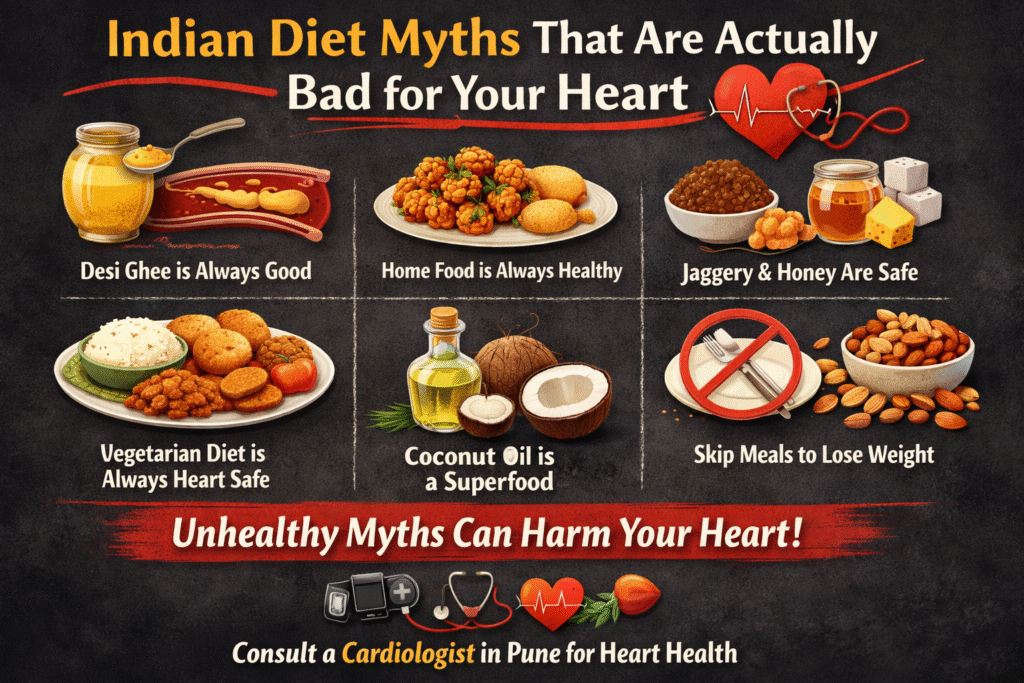
Heart disease is rising rapidly in India, and surprisingly, many of our everyday eating habits play a major role. While traditional Indian food can be healthy and nourishing, several common diet myths may silently damage your heart health.
As a leading Cardiologist in Pune, Dr. Tanmay Kulkarni often sees patients who believe they are eating “healthy,” yet their cholesterol levels, blood pressure, or weight tell a different story. Let’s break down some common Indian diet myths that may actually be harming your heart.
Myth 1: “Desi Ghee Is Always Good for the Heart”
Ghee has been part of Indian kitchens for centuries. While small amounts of pure ghee can be included in moderation, the belief that “more ghee means better health” is misleading.
Ghee is rich in saturated fats. Excessive intake can raise LDL (bad cholesterol), increasing the risk of blocked arteries and heart disease. Portion control is key. Instead of eliminating it completely, use it sparingly and balance it with heart-friendly fats like nuts, seeds, and olive oil.
Myth 2: “Home-Cooked Food Is Automatically Healthy”
Yes, home-cooked food is generally better than processed junk. However, how it is prepared matters.
Deep-fried snacks like pakoras, puris, bhajiyas, and excessive oil tempering (tadka) can significantly increase calorie and fat intake. Even daily meals loaded with oil, butter, and cream can strain your heart over time.
A Heart specialist in Pune would recommend cooking methods like steaming, roasting, sautéing with minimal oil, and using healthier oil options in controlled quantities.
Myth 3: “Brown Sugar, Jaggery, or Honey Are Safe Alternatives”
Many people replace white sugar with jaggery or honey believing they are heart-healthy. While these may contain trace minerals, they are still forms of sugar and can spike blood glucose levels.
Excess sugar contributes to obesity, diabetes, and high triglycerides — all major risk factors for heart disease. The key is not replacing sugar blindly but reducing overall sugar intake.
Myth 4: “Vegetarian Diet Means No Heart Risk”
India has a large vegetarian population, and many assume that avoiding meat automatically protects the heart. Unfortunately, that’s not always true.
A vegetarian diet heavy in refined carbs like white rice, maida rotis, sweets, fried snacks, and sugary tea can increase cholesterol and blood sugar levels. A heart-friendly vegetarian diet should include whole grains, pulses, vegetables, fruits, nuts, and seeds.
It’s not about vegetarian vs non-vegetarian — it’s about balanced nutrition.
Myth 5: “Coconut Oil Is a Superfood for Everyone”
Coconut oil has gained popularity due to social media trends. While it may have certain benefits, it is still high in saturated fats.
Excess consumption may increase LDL cholesterol in some individuals. People with existing heart disease, high cholesterol, or family history of cardiac issues should consult a Cardiologist in Pune before making it a daily staple.
Moderation and personalization are essential when choosing cooking oils.
Myth 6: “Skipping Meals Helps in Weight Loss”
Some people skip breakfast or dinner thinking it will help reduce weight. However, irregular eating patterns can slow metabolism and lead to overeating later.
Large, heavy meals — especially at night — can increase blood sugar and cholesterol levels. For heart health, it’s better to eat smaller, balanced meals at regular intervals.
Myth 7: “Dry Fruits Can Be Eaten in Unlimited Quantity”
Almonds, walnuts, and pistachios are heart-friendly, but they are calorie-dense. Overeating them can lead to weight gain.
A handful per day is sufficient. Portion control makes even healthy foods truly beneficial for your heart.
The Real Truth About a Heart-Healthy Indian Diet
A heart-friendly Indian diet doesn’t mean giving up your favorite foods completely. It means:
- Controlling portion sizes
- Reducing fried and processed foods
- Choosing whole grains over refined flour
- Limiting sugar and salt
- Including plenty of vegetables and fruits
- Staying physically active
Heart disease is preventable in many cases with simple lifestyle corrections. Small daily changes can make a big difference in protecting your heart for the long term.
If you have risk factors like high blood pressure, diabetes, obesity, or family history of heart disease, early consultation with a qualified Heart specialist in Pune can help you stay ahead of complications.
Final Thoughts
Diet myths are deeply rooted in culture and tradition, but not all traditional beliefs are heart-friendly in today’s lifestyle. Awareness is the first step toward prevention.
Your heart works 24/7 — it deserves the right nutrition and care. Making informed food choices today can protect you from serious cardiac problems tomorrow.
For personalized guidance on heart health, risk assessment, and preventive care, consult Dr. Tanmay Kulkarni, an experienced Cardiologist in Pune, dedicated to helping patients lead healthier, longer lives.
 Select an element to maximize. Press ESC to cancel.