
Endocarditis is a serious infection that affects the inner lining of the heart chambers and valves, known as the endocardium. If left untreated, it can lead to severe complications such as heart valve damage, stroke, heart failure, and other life-threatening conditions. Early diagnosis plays a crucial role in successful treatment and recovery.
At Dr. Tanmay S Kulkarni, Cardiologist in Pune, patients receive comprehensive cardiac evaluation and advanced diagnostic care for conditions like infective endocarditis. Understanding the symptoms and diagnostic process can help patients seek timely medical attention and prevent complications.
What is Endocarditis?
Endocarditis occurs when bacteria, fungi, or other germs enter the bloodstream and attach themselves to damaged areas of the heart. People with artificial heart valves, congenital heart disease, weakened immunity, or previous heart infections are at higher risk of developing this condition.
Common symptoms may include:
- Persistent fever
- Fatigue and weakness
- Chest pain
- Shortness of breath
- Night sweats
- Swelling in legs or feet
- Unexplained weight loss
- Heart murmur
Since these symptoms can resemble other illnesses, proper diagnosis by an experienced cardiologist is extremely important.
How is Endocarditis Diagnosed?
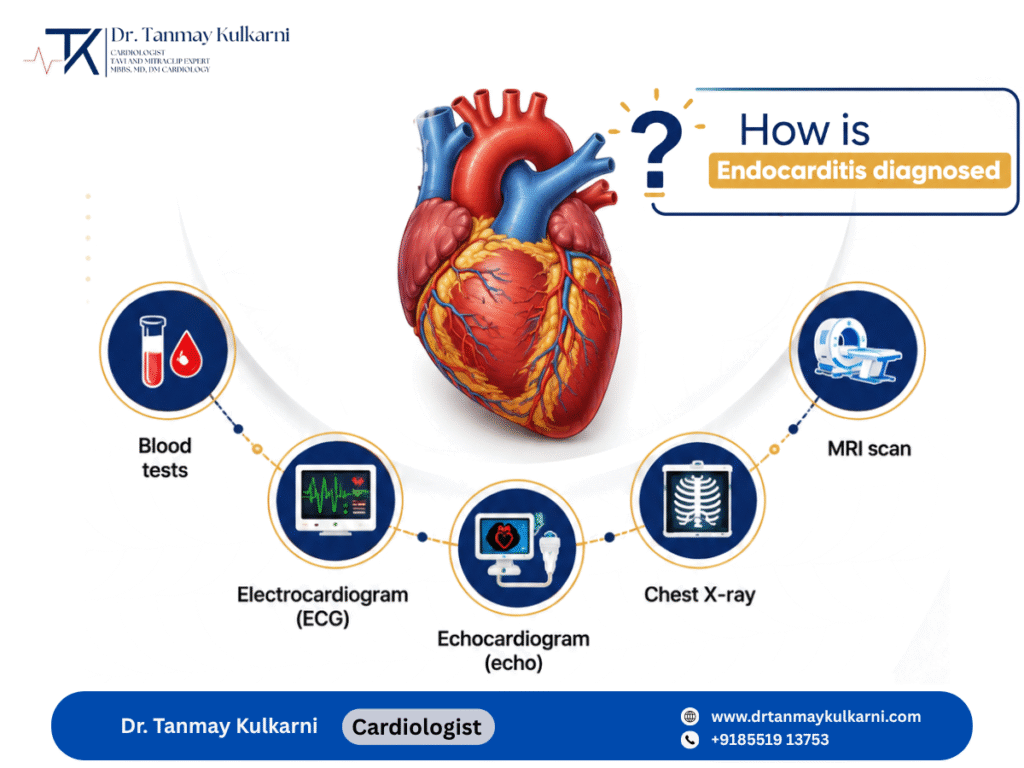
Diagnosing endocarditis involves a combination of clinical evaluation, imaging tests, and laboratory investigations. At Dr. Tanmay S Kulkarni, Cardiologist in Pune, advanced cardiac diagnostic methods are used to accurately identify the infection and assess heart function.
1. Blood Tests
Blood tests are one of the most important steps in diagnosing endocarditis. These tests help identify the bacteria or organisms responsible for the infection.
Doctors usually perform multiple blood cultures to detect microorganisms present in the bloodstream. Blood tests may also show signs of inflammation, infection, or anemia associated with endocarditis.
Blood cultures help doctors:
- Confirm infection
- Identify the exact organism
- Choose the most effective antibiotic treatment
Early blood testing is essential because delayed diagnosis may increase the risk of complications.
2. Electrocardiogram (ECG)
An Electrocardiogram, commonly called ECG, records the electrical activity of the heart. Although ECG alone cannot confirm endocarditis, it helps doctors evaluate heart rhythm abnormalities and detect complications affecting heart function.
ECG may reveal:
- Irregular heartbeat
- Conduction abnormalities
- Signs of cardiac stress
At Dr. Tanmay S Kulkarni, Cardiologist in Pune, ECG is commonly used as part of a complete cardiac assessment for patients experiencing symptoms like chest pain, palpitations, or breathlessness.
3. Echocardiogram (Echo)
An echocardiogram is one of the most effective imaging tests for diagnosing endocarditis. It uses sound waves to create detailed images of the heart valves and chambers.
There are two types of echocardiograms commonly used:
- Transthoracic Echocardiogram (TTE)
- Transesophageal Echocardiogram (TEE)
An echo helps detect:
- Vegetations or infected growths on heart valves
- Valve damage
- Abscess formation
- Blood flow abnormalities
TEE provides clearer images and is often recommended when doctors need more detailed visualization of the heart structures.
At Dr. Tanmay S Kulkarni, Cardiologist in Pune, advanced echocardiography technology helps ensure accurate diagnosis and treatment planning.
4. Chest X-ray
A chest X-ray helps doctors evaluate the condition of the lungs and heart. In some cases of endocarditis, fluid accumulation in the lungs or enlargement of the heart may be visible.
Chest X-rays may help identify:
- Fluid in lungs
- Enlarged heart
- Signs of heart failure
Although it is not the primary diagnostic test for endocarditis, chest imaging provides valuable supportive information.
5. MRI Scan and Advanced Imaging
MRI scans may be recommended in complex cases where complications are suspected. MRI helps assess damage to surrounding tissues, blood vessels, or organs affected by infection.
Advanced imaging may help detect:
- Brain complications from emboli
- Spinal infections
- Organ damage caused by bacterial spread
Modern diagnostic facilities at Dr. Tanmay S Kulkarni, Cardiologist in Pune support comprehensive heart care and advanced evaluation for complex cardiac conditions.
Why Early Diagnosis is Important
Delayed diagnosis of endocarditis can lead to severe complications, including permanent heart valve damage and stroke. Early identification allows doctors to begin targeted antibiotic treatment quickly and reduce long-term risks.
Patients should seek immediate medical attention if they experience:
- Persistent fever with heart disease history
- Unexplained fatigue
- Breathlessness
- Chest discomfort
- Swelling in legs
- Sudden neurological symptoms
Timely consultation with an experienced cardiologist can make a significant difference in recovery outcomes.
Expert Cardiac Care in Pune
When it comes to diagnosing and managing heart infections, choosing an experienced specialist is essential. Dr. Tanmay S Kulkarni, Cardiologist in Pune, offers advanced cardiac diagnostics, personalized treatment plans, and compassionate patient care.
With expertise in preventive cardiology, heart disease management, and advanced imaging techniques, Dr. Tanmay S Kulkarni focuses on accurate diagnosis and evidence-based treatment for every patient.
Conclusion
Endocarditis is a potentially serious heart infection that requires prompt diagnosis and medical care. Blood tests, ECG, echocardiography, chest X-rays, and MRI scans all play important roles in identifying the condition and guiding treatment.
If you or your loved one are experiencing symptoms related to heart infection or unexplained cardiac issues, consult Dr. Tanmay S Kulkarni, Cardiologist in Pune, for expert evaluation and comprehensive heart care.
Early diagnosis saves lives and protects long-term heart health.