
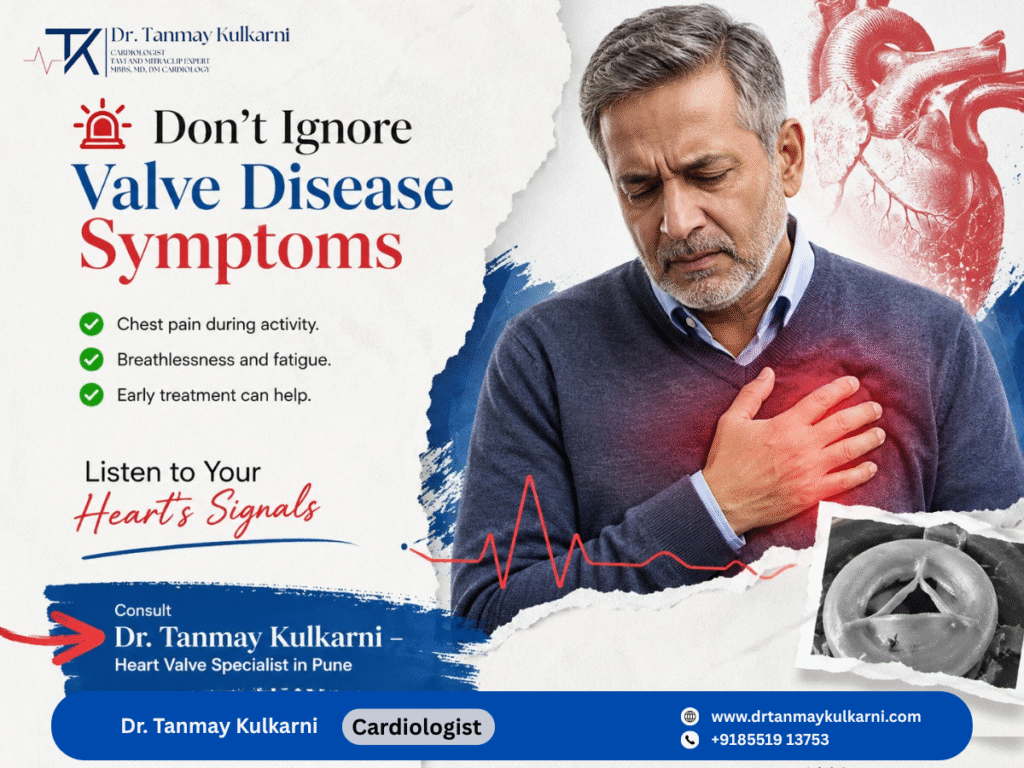
Your heart works continuously to pump blood throughout your body, and its valves play a vital role in ensuring blood flows in the correct direction. When one or more heart valves do not function properly, it can lead to heart valve disease, a condition that may gradually affect your heart’s ability to pump blood efficiently. Recognizing the warning signs early and seeking expert medical care can prevent serious complications and improve your quality of life.
I am Dr. Tanmay S Kulkarni, Cardiologist in Pune, and through my practice and Google Business Profile – Dr. Tanmay S Kulkarni, Cardiologist in Pune, I often meet patients who initially ignored mild symptoms, assuming they were simply due to age, stress, or fatigue. Early evaluation can make a significant difference in treatment outcomes.
What is Heart Valve Disease?
The heart has four valves—mitral, aortic, tricuspid, and pulmonary—that open and close with every heartbeat. These valves ensure blood flows smoothly in the correct direction. When a valve becomes narrowed (stenosis), leaky (regurgitation), or fails to open and close properly, the heart has to work harder to circulate blood.
Heart valve disease may develop gradually over many years or occur suddenly due to infections or other medical conditions.
Common Symptoms of Heart Valve Disease
The symptoms of valve disease can vary depending on which valve is affected and how severe the condition is. Some people may not notice symptoms during the early stages.
Common warning signs include:
- Chest pain or discomfort, especially during physical activity
- Breathlessness while walking, climbing stairs, or lying flat
- Unusual fatigue or reduced exercise capacity
- Palpitations or irregular heartbeat
- Swelling in the ankles, feet, or legs
- Dizziness or fainting episodes
- Heart murmur detected during examination
If these symptoms persist or worsen, they should never be ignored. Consulting an experienced Cardiologist in Pune can help identify the underlying cause before complications develop.
Causes and Risk Factors
Several factors can contribute to heart valve disease, including:
- Age-related wear and tear
- High blood pressure
- Congenital heart valve abnormalities
- Rheumatic fever
- Previous heart infections (infective endocarditis)
- Coronary artery disease
- Heart attacks
- Connective tissue disorders
Individuals with diabetes, high cholesterol, obesity, or a family history of heart disease should also undergo regular heart evaluations.
Why Early Diagnosis Matters
Heart valve disease often progresses slowly. Many patients adjust to their symptoms without realizing that their heart function is gradually declining.
Early diagnosis helps:
- Prevent heart failure
- Reduce the risk of stroke
- Prevent permanent heart muscle damage
- Improve treatment success
- Maintain better quality of life
Routine cardiac check-ups become increasingly important after the age of 40, especially if you have risk factors or persistent symptoms.
How Heart Valve Disease is Diagnosed
A cardiologist will begin with a detailed medical history and physical examination. If a heart murmur or other abnormal findings are present, additional investigations may include:
- Electrocardiogram (ECG)
- Echocardiography (2D Echo)
- Doppler study
- Chest X-ray
- Stress testing
- Cardiac CT or MRI (when indicated)
- Cardiac catheterization in selected cases
These investigations help determine the severity of valve disease and guide the most appropriate treatment plan.
Treatment Options
Treatment depends on the type and severity of valve disease.
Mild cases may only require:
- Regular monitoring
- Lifestyle modifications
- Blood pressure control
- Medications to manage symptoms
Moderate to severe valve disease may require:
- Medical therapy
- Balloon valvotomy for selected patients
- Transcatheter valve procedures
- Heart valve repair
- Heart valve replacement surgery
Advances in cardiology have made many valve treatments less invasive, allowing quicker recovery and improved long-term outcomes.
Heart-Healthy Lifestyle Tips
While not every valve disease can be prevented, maintaining good cardiovascular health can lower your overall risk.
Helpful habits include:
- Eat a balanced heart-healthy diet
- Exercise regularly after medical advice
- Maintain healthy blood pressure
- Control diabetes and cholesterol
- Avoid smoking and tobacco
- Limit alcohol consumption
- Maintain a healthy weight
- Attend regular cardiac check-ups
Listening to your body and acting on early symptoms remains one of the most effective ways to protect your heart.
Consult Dr. Tanmay S Kulkarni, Cardiologist in Pune
If you experience chest discomfort, breathlessness, fatigue, or other symptoms that could indicate heart valve disease, do not delay medical evaluation.
As Dr. Tanmay S Kulkarni, Cardiologist in Pune, I believe that timely diagnosis, evidence-based treatment, and personalized cardiac care can significantly improve patient outcomes. Whether you require preventive heart screening, evaluation of heart murmurs, or management of valve disorders, my goal is to provide comprehensive cardiac care tailored to your needs.
For trusted heart care, you can also visit my Google Business Profile – Dr. Tanmay S Kulkarni, Cardiologist in Pune, to learn more about available services, patient reviews, and appointment information.
Remember, your heart often gives early warning signs. Listening to those signals today can help protect your heart for many years to come.