
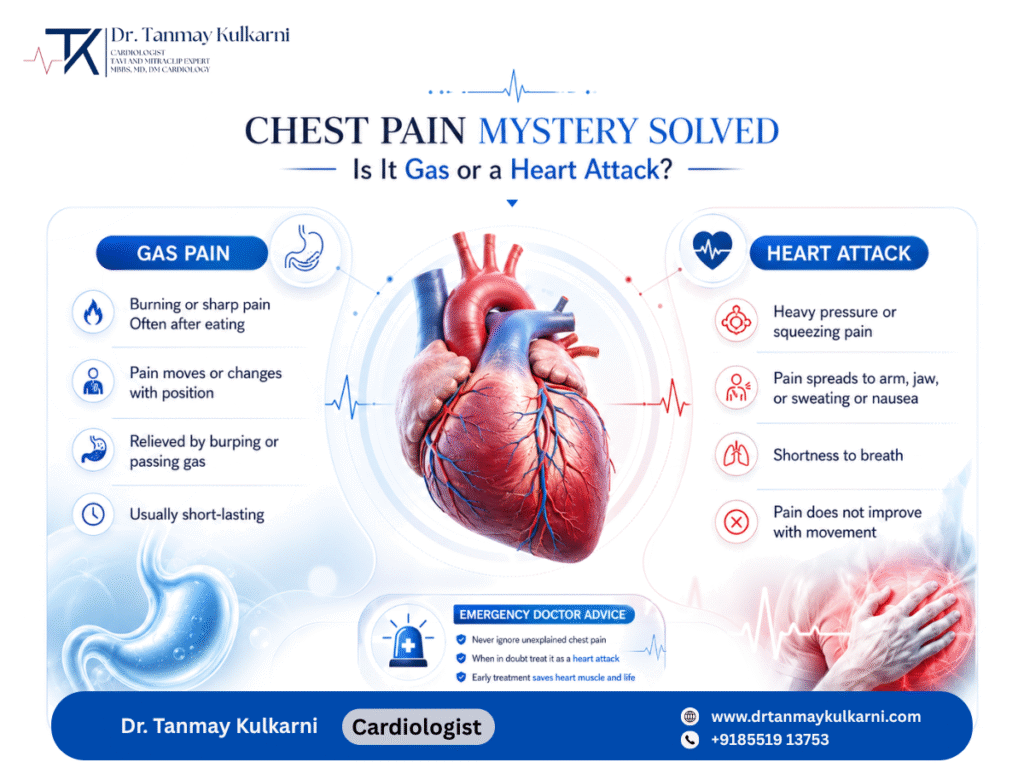
Chest pain is one of the most alarming symptoms a person can experience. While many cases are related to digestive issues such as gas, acidity, or indigestion, chest pain can also be a warning sign of a serious heart condition, including a heart attack. Knowing the difference can help you seek timely medical attention and potentially save your life.
As a Heart Specialist in Pune, I often meet patients who ignore chest discomfort assuming it is just gas, while others become anxious about harmless digestive pain. Understanding the key differences between gas-related chest pain and heart attack symptoms is essential for everyone.
At Dr. Tanmay S Kulkarni, Heart Specialist in Pune, we believe that awareness and early diagnosis play a vital role in preventing serious cardiac complications.
What Causes Gas-Related Chest Pain?
Gas pain occurs when excess gas builds up in the digestive system. It can cause discomfort in the upper abdomen and chest, sometimes mimicking heart-related symptoms.
Common causes include:
- Indigestion
- Acid reflux (GERD)
- Eating too quickly
- Overeating
- Carbonated drinks
- Spicy or fatty foods
- Digestive disorders
Gas pain often feels sharp, burning, or cramp-like and may be accompanied by bloating, burping, or a feeling of fullness.
Typical Signs of Gas Pain
- Burning or sharp pain in the chest or upper abdomen
- Pain that occurs after eating
- Pain that changes with body position
- Relief after burping or passing gas
- Temporary discomfort that usually resolves quickly
- Associated bloating or acidity
Although gas pain can be uncomfortable, it is generally not life-threatening.
What Does a Heart Attack Feel Like?
A heart attack occurs when blood flow to the heart muscle becomes blocked. Without prompt treatment, heart muscle damage can occur rapidly.
Many people expect a heart attack to cause sudden, severe chest pain. However, symptoms can vary from person to person. Some individuals may experience mild discomfort that gradually worsens.
Common Heart Attack Symptoms
- Heavy pressure or squeezing sensation in the chest
- Tightness or fullness in the center of the chest
- Pain spreading to the arm, shoulder, neck, jaw, or back
- Shortness of breath
- Cold sweating
- Nausea or vomiting
- Dizziness or lightheadedness
- Extreme fatigue
Unlike gas pain, heart attack symptoms generally do not improve with changes in position or after burping.
Key Differences Between Gas Pain and a Heart Attack
Understanding these differences may help identify a potentially serious situation:
Gas Pain
- Often occurs after meals
- Burning or sharp discomfort
- May improve after burping
- Associated with bloating and indigestion
- Changes with posture or movement
- Usually short-lasting
Heart Attack
- Pressure, tightness, or squeezing sensation
- Pain may radiate to the arm, jaw, neck, or back
- Accompanied by sweating and breathlessness
- Does not improve with movement
- May persist for several minutes or longer
- Can occur during rest or physical activity
However, it is important to remember that symptoms are not always typical. Some patients, especially women, diabetics, and elderly individuals, may experience unusual or mild symptoms.
Why People Mistake Heart Attacks for Gas
One of the biggest reasons for delayed treatment is that heart attack symptoms can resemble acidity or indigestion. Many patients wait for the discomfort to pass, assuming it is a digestive problem.
This delay can be dangerous because the first few hours after a heart attack are critical. Early treatment can significantly reduce heart damage and improve survival rates.
At Dr. Tanmay S Kulkarni, Heart Specialist in Pune, we strongly advise patients not to self-diagnose persistent chest pain.
When Should You Seek Immediate Medical Attention?
Seek emergency medical care immediately if you experience:
- Chest pain lasting more than a few minutes
- Chest pressure or squeezing sensation
- Pain radiating to the arm, jaw, neck, or back
- Sudden shortness of breath
- Unexplained sweating
- Nausea accompanied by chest discomfort
- Dizziness or fainting
When in doubt, it is always safer to treat chest pain as a possible heart emergency until proven otherwise.
Who Is at Higher Risk of Heart Disease?
Certain factors increase the likelihood of a cardiac event:
- High blood pressure
- Diabetes
- High cholesterol
- Smoking
- Obesity
- Family history of heart disease
- Sedentary lifestyle
- Excessive stress
If you have one or more of these risk factors, regular cardiac evaluations are strongly recommended.
Importance of Early Cardiac Screening
Preventive heart care can identify potential problems before they become emergencies. Modern diagnostic tools such as ECG, 2D Echo, TMT, Holter monitoring, and advanced cardiac imaging help detect heart disease at an early stage.
Regular check-ups with an experienced cardiologist can help manage risk factors and reduce the chances of serious complications.
Consult Dr. Tanmay S Kulkarni, Heart Specialist in Pune
Chest pain should never be ignored. Whether the cause is gas, acidity, or a heart-related condition, proper evaluation is essential for accurate diagnosis and peace of mind.
Dr. Tanmay S Kulkarni, Heart Specialist in Pune, provides comprehensive cardiac care, preventive heart screenings, heart attack risk assessment, hypertension management, cholesterol management, and advanced cardiac consultations. If you experience recurrent chest discomfort, shortness of breath, or have risk factors for heart disease, timely consultation can make all the difference.
Conclusion
Gas pain and heart attack symptoms can sometimes appear similar, but the consequences of missing a heart attack can be life-threatening. If chest pain is severe, persistent, or accompanied by symptoms such as sweating, breathlessness, or pain radiating to the arm or jaw, seek immediate medical attention.
For expert cardiac evaluation and personalized heart care, consult Dr. Tanmay S Kulkarni, Heart Specialist in Pune, and take a proactive step toward protecting your heart health.