
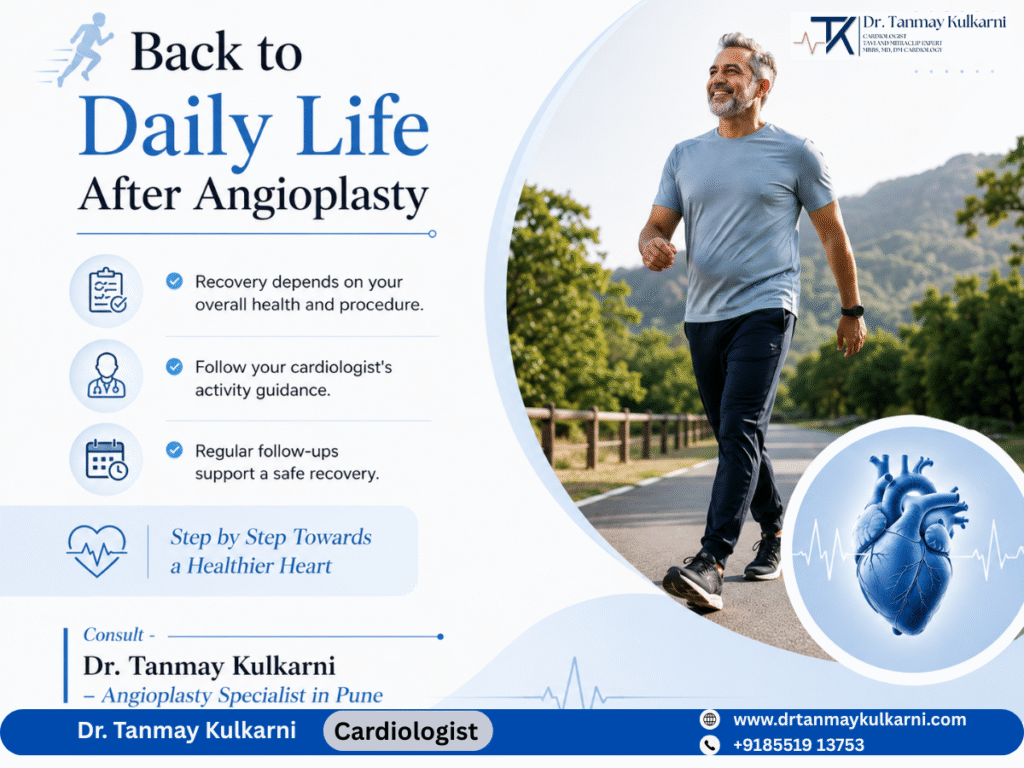
Angioplasty is a commonly performed procedure used to improve blood flow through a narrowed or blocked coronary artery. For many patients, completing the procedure is an important step in managing coronary artery disease, but recovery and long-term heart care remain equally important.
Returning to daily activities after angioplasty is usually gradual and depends on several factors, including the reason for the procedure, overall health, the type of angioplasty performed and the presence of other medical conditions.
Dr. Tanmay S Kulkarni, a Cardiologist in Pune, provides comprehensive cardiac care and guidance for patients recovering after angioplasty and other heart procedures.
What Happens During Angioplasty?
During coronary angioplasty, a catheter is guided through a blood vessel to the affected coronary artery. A small balloon may be used to widen the narrowed area, and a stent may be placed to help keep the artery open when appropriate.
Although angioplasty can improve blood flow to the heart, it does not remove the underlying risk factors that may contribute to coronary artery disease. Therefore, continued medical care and heart-healthy habits are important after the procedure.
How Long Does Recovery Take After Angioplasty?
Recovery time varies from person to person. Some patients may return to routine activities relatively soon, while others may require a longer recovery period, particularly if angioplasty was performed during an acute heart event or if there are other health concerns.
Your cardiologist will provide specific instructions regarding:
- Physical activity
- Driving
- Work
- Exercise
- Wound or catheter-site care
- Medicines
- Follow-up appointments
It is important to follow these recommendations rather than comparing your recovery with someone else’s experience.
When Can You Start Walking After Angioplasty?
Light activity such as walking may be introduced according to your cardiologist’s advice. Gradually increasing activity can be part of cardiac recovery for many patients.
However, the appropriate level of activity depends on individual circumstances. Patients should not begin strenuous exercise, heavy lifting or demanding physical activity without appropriate medical guidance.
A structured cardiac rehabilitation program may also be recommended for selected patients. Cardiac rehabilitation can combine supervised physical activity, education and lifestyle support.
Take Your Medicines as Prescribed
Medicines are an important part of care after angioplasty, particularly when a stent has been placed.
Depending on your condition, your cardiologist may prescribe medicines to reduce the risk of blood clots, control cholesterol, manage blood pressure or address other cardiovascular risk factors.
Do not stop or change prescribed heart medicines without discussing it with your doctor. This is particularly important for antiplatelet medicines prescribed after stent placement.
If you experience unusual bleeding, side effects or difficulty taking your medicines, contact your healthcare provider for advice.
Follow-Up Appointments Matter
Regular follow-up after angioplasty allows your cardiologist to assess your recovery and review important cardiovascular risk factors.
During follow-up visits, your doctor may discuss:
- Blood pressure
- Cholesterol levels
- Blood sugar
- Symptoms
- Physical activity
- Medication adherence
- Lifestyle changes
- Further cardiac evaluation when required
Regular monitoring can help ensure that your ongoing heart-care plan remains appropriate.
Lifestyle Changes After Angioplasty
Angioplasty is only one part of long-term coronary artery disease management. Lifestyle changes can support overall cardiovascular health.
Eat a Heart-Healthy Diet
Focus on a balanced diet containing vegetables, fruits, whole grains, appropriate sources of protein and healthy fats. Limit excessive intake of salt, saturated fats, trans fats and highly processed foods.
Dietary recommendations should be personalized, especially if you have diabetes, kidney disease or other medical conditions.
Stay Physically Active
Once your cardiologist confirms that exercise is appropriate, regular physical activity can become part of your heart-health routine. Walking is often a practical starting point, with activity increased gradually according to medical advice.
Avoid Tobacco
Smoking and tobacco use are major cardiovascular risk factors. Stopping tobacco use is an important step toward better heart health.
Manage Stress and Sleep
Good-quality sleep and healthy ways of managing stress can complement other heart-health measures. Relaxation techniques, appropriate physical activity and maintaining a regular sleep schedule may be helpful.
What Symptoms Should You Not Ignore?
After angioplasty, certain symptoms require prompt medical attention. Seek urgent medical evaluation if you develop symptoms such as significant or persistent chest pain, severe breathlessness, fainting or other sudden symptoms that concern you.
Symptoms should not be assumed to be part of normal recovery without medical assessment.
Can Heart Disease Return After Angioplasty?
Angioplasty treats a specific narrowed or blocked coronary artery, but coronary artery disease can affect other blood vessels as well. Therefore, long-term management remains important.
Controlling risk factors such as high cholesterol, high blood pressure, diabetes and tobacco use can be an important part of ongoing cardiovascular care.
Your cardiologist can help develop an individualized plan based on your medical history and risk profile.
Returning to a Normal Routine
Getting back to work, household activities, exercise and other routines should be a gradual process guided by your healthcare team.
Rather than focusing only on how quickly you can resume your previous routine, the goal should be to recover safely while building sustainable heart-healthy habits.
For patients searching for an Angioplasty Specialist in Pune, Dr. Tanmay S Kulkarni provides cardiac evaluation and treatment with individualized guidance based on each patient’s condition.
Conclusion
Life after angioplasty involves more than recovering from the procedure itself. Medication adherence, regular follow-ups, appropriate physical activity, a balanced diet and management of cardiovascular risk factors all contribute to ongoing heart care.
Recovery is different for every patient, so always follow the activity and treatment recommendations provided by your cardiologist.
Dr. Tanmay S Kulkarni, a Cardiologist in Pune, can guide patients through post-angioplasty care and help them understand the next steps toward maintaining cardiovascular health.