
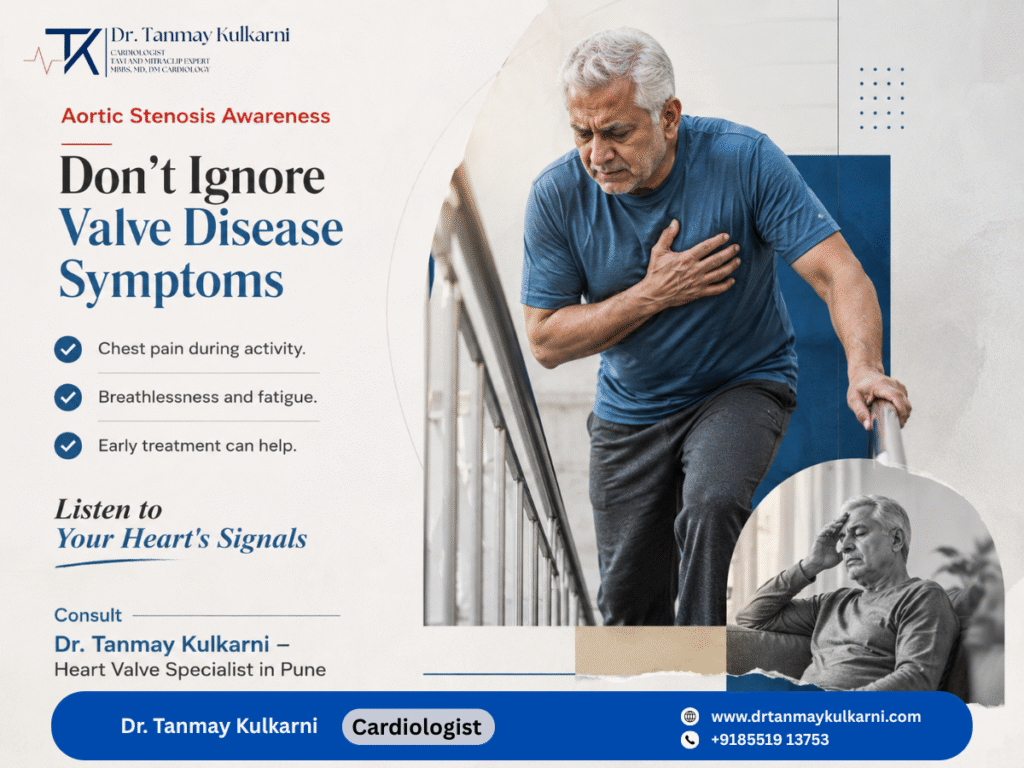
Your heart works continuously to pump blood throughout your body. One of the most important parts of this process is the aortic valve, which allows oxygen-rich blood to flow from the heart to the rest of the body. When this valve becomes narrowed, a condition known as Aortic Stenosis develops. If left untreated, it may affect the heart’s ability to function efficiently.
Understanding the warning signs and seeking medical advice early can help reduce complications and improve long-term heart health. If you experience symptoms such as chest discomfort, breathlessness, or unexplained fatigue, consulting Dr. Tanmay S Kulkarni, Cardiologist in Pune, can help you receive timely evaluation and appropriate treatment guidance.
What is Aortic Stenosis?
Aortic Stenosis is a condition in which the aortic valve becomes narrowed or stiff, restricting blood flow from the heart to the body. As the valve opening becomes smaller, the heart must work harder to pump blood, which may eventually lead to heart-related complications if not evaluated and managed appropriately.
The condition may develop gradually over time, making it important to recognize even mild symptoms and schedule regular heart check-ups.
Common Symptoms of Aortic Valve Disease
Many people may not notice symptoms during the early stages. As the condition progresses, common symptoms may include:
- Chest pain or discomfort, especially during physical activity
- Shortness of breath
- Fatigue or reduced exercise tolerance
- Dizziness or fainting spells
- Irregular heartbeat or palpitations
- Difficulty performing routine daily activities
These symptoms can also occur in other heart conditions, making a professional evaluation essential. Dr. Tanmay S Kulkarni, Cardiologist in Pune, can determine the underlying cause through a detailed clinical assessment.
What Causes Aortic Stenosis?
Several factors may contribute to the development of Aortic Stenosis, including:
- Age-related calcium buildup on the heart valve
- Congenital heart valve abnormalities present since birth
- Previous rheumatic fever
- Certain medical conditions affecting heart valves
Regular health check-ups are especially important for older adults and individuals with a family history of heart disease.
When Should You Consult a Cardiologist?
Do not ignore persistent heart-related symptoms. You should consider consulting a Cardiologist in Pune if you experience:
- Ongoing chest discomfort
- Breathlessness during routine activities
- Frequent dizziness
- Reduced physical stamina
- Heart murmurs detected during a health examination
Early medical evaluation helps identify the cause of symptoms and allows for timely treatment planning.
How is Aortic Stenosis Diagnosed?
A cardiologist may recommend one or more diagnostic tests based on your symptoms and medical history, such as:
- Physical examination
- Electrocardiogram (ECG)
- Echocardiography (2D Echo)
- Stress testing when appropriate
- CT scan or other advanced cardiac imaging if required
Accurate diagnosis helps determine the severity of the condition and guides suitable treatment decisions.
Treatment Options
Treatment depends on the severity of the disease, symptoms, age, and overall health. Management may include:
- Regular monitoring for mild cases
- Lifestyle modifications
- Medications to manage associated heart conditions
- Advanced procedures such as Transcatheter Aortic Valve Implantation (TAVI) for selected patients
- Surgical valve replacement when clinically indicated
Every treatment recommendation is personalized after careful evaluation. Dr. Tanmay S Kulkarni, Cardiologist in Pune, discusses the available options and helps patients make informed decisions based on their individual health needs.
Lifestyle Tips for Better Heart Health
Although not every case of valve disease can be prevented, healthy habits support overall cardiovascular wellness:
- Follow a heart-friendly balanced diet
- Stay physically active as advised by your doctor
- Control blood pressure, diabetes, and cholesterol
- Avoid tobacco use
- Maintain a healthy body weight
- Attend regular heart health check-ups
- Take prescribed medications as directed
These measures can contribute to better heart health and overall well-being.
Why Choose Dr. Tanmay S Kulkarni?
If you are looking for expert cardiac care, Dr. Tanmay S Kulkarni, Cardiologist in Pune, provides comprehensive evaluation and evidence-based management for various heart conditions, including heart valve diseases. Every patient receives individualized attention, thorough assessment, and treatment recommendations tailored to their medical condition.
Including your Google Business Profile name, Dr. Tanmay S Kulkarni, Cardiologist in Pune, across your online presence helps patients easily identify your practice while maintaining consistency for local search visibility.
Conclusion
Heart valve disease often develops gradually, but early diagnosis can make a significant difference in treatment planning and quality of life. Symptoms such as chest pain, breathlessness, fatigue, or dizziness should never be ignored.
If you have concerns about your heart health or have been advised to undergo a cardiac evaluation, schedule a consultation with Dr. Tanmay S Kulkarni, Cardiologist in Pune. A timely assessment can help determine the cause of your symptoms and guide appropriate next steps for your heart care.