
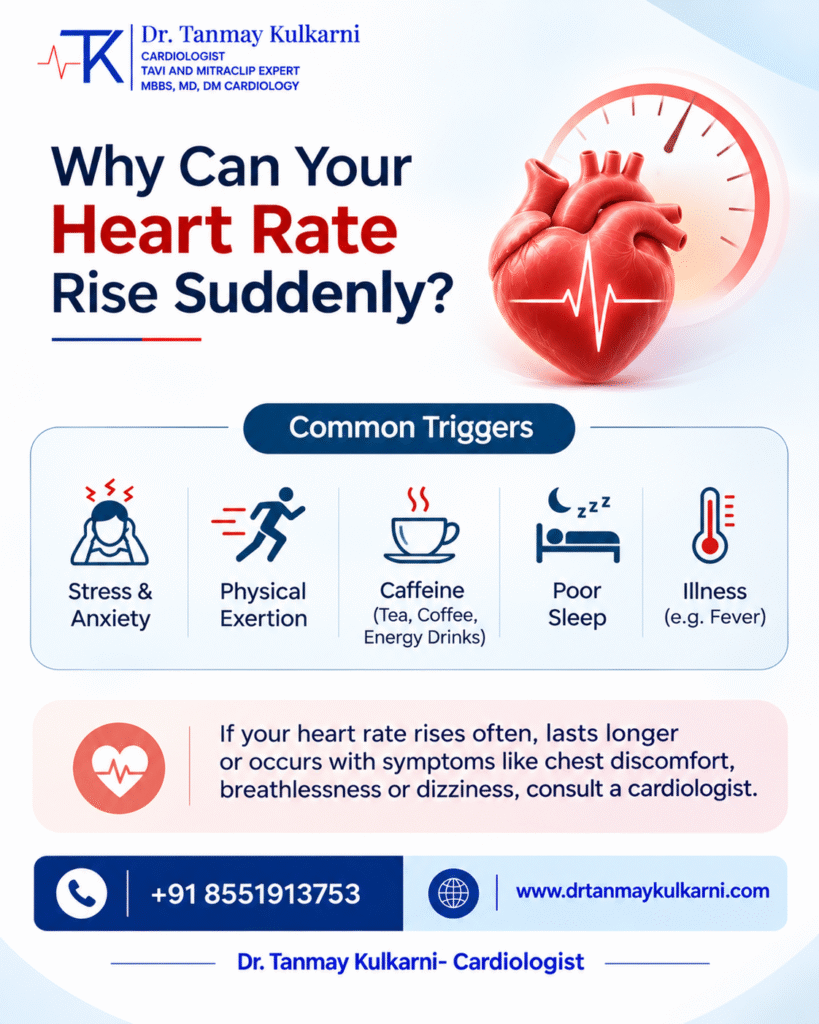
Your heart rate naturally changes throughout the day. It can increase during exercise, emotional stress, excitement or even when you are unwell. In many situations, a temporary increase is a normal response from the body. However, if your heartbeat suddenly becomes very fast without an obvious reason, keeps happening repeatedly or occurs along with other symptoms, it deserves attention.
A sudden increase in heart rate can have several possible causes. These may range from everyday triggers such as stress, caffeine and lack of sleep to conditions involving the heart, thyroid, blood count or other systems of the body. Understanding the possible triggers can help you recognise when professional evaluation may be useful.
Dr. Tanmay S. Kulkarni, Cardiologist in Baner, Pune, evaluates symptoms such as palpitations, rapid heartbeat, dizziness and breathlessness by considering the individual’s overall health, medical history and risk factors.
What Is a Fast Heart Rate?
Heart rate refers to the number of times your heart beats in one minute. In adults, a resting heart rate above 100 beats per minute is generally described as tachycardia. However, a higher number does not automatically mean that there is a serious heart problem. Heart rate can temporarily rise as the body’s normal response to physical activity, emotions, fever or other conditions.
The important questions are why the heart rate increased, how long it remains elevated, whether it returns to normal and whether other symptoms occur at the same time.
Common Reasons for a Sudden Increase
1. Stress and Anxiety
Emotional stress can activate the body’s fight-or-flight response. Hormones such as adrenaline can temporarily increase heart rate and blood pressure. Anxiety, fear, excitement and emotional distress may therefore make the heartbeat feel faster or stronger.
If episodes repeatedly occur during stressful situations and settle after relaxation, stress may be contributing to the symptoms. However, recurring palpitations should not automatically be attributed to anxiety without considering other possible causes.
2. Physical Activity
The heart needs to pump more blood when the body’s muscles require additional oxygen. As exercise intensity increases, the heart rate normally rises.
Running, climbing stairs, brisk walking or strenuous workouts can therefore produce a noticeable increase in heart rate. It should gradually settle after activity ends and the body returns to a resting state.
3. Caffeine and Stimulants
Tea, coffee, energy drinks and other caffeinated products can affect heart rate in some people. Caffeine can temporarily increase sympathetic activity and may cause palpitations or a faster heartbeat in susceptible individuals.
The response varies between individuals. If you notice that episodes regularly follow high caffeine intake, keeping a record of consumption and symptoms can be useful during a medical consultation.
4. Poor Sleep
Insufficient sleep can influence the body’s stress response and may contribute to episodes of palpitations or abnormal rhythm in some individuals. Sleep problems can also make people more sensitive to stress and stimulants.
Maintaining a consistent sleep routine and addressing persistent sleep difficulties can therefore be an important part of overall heart health.
5. Fever or Illness
When body temperature rises, the heart may beat faster. Fever, infection, dehydration and other illnesses can increase the body’s demand for circulation and contribute to a temporary rise in heart rate.
The heart rate often improves when the underlying illness is addressed. Persistent or unusually rapid heartbeats, however, may require medical assessment.
Can a Heart Rhythm Problem Cause It?
Yes. Some episodes of rapid heartbeat can be related to an abnormal heart rhythm called an arrhythmia. Certain rhythm disorders can begin suddenly and may stop just as quickly.
People may describe these episodes as racing, pounding, fluttering or unusually strong heartbeats. Some may also experience dizziness, weakness, breathlessness or chest discomfort.
Not every episode of palpitations indicates an arrhythmia, but repeated or unexplained episodes should be discussed with a cardiologist.
When Should You Consider a Cardiac Evaluation?
Occasional brief palpitations without other symptoms may not always indicate a serious problem. However, medical evaluation becomes more important when episodes are frequent, last longer than usual, occur at rest or are becoming progressively more noticeable.
A cardiologist may review your symptoms, pulse, blood pressure, medical history and risk factors. Depending on the situation, investigations such as an ECG, Holter Monitoring, Echocardiogram or other cardiac tests may be considered.
A longer period of heart rhythm monitoring can be particularly useful when symptoms occur intermittently and are not present during a standard ECG.
Keep Track of Your Episodes
If your heart rate frequently rises suddenly, maintain a simple record of when it happens.
Note:
- What you were doing at the time
- How long the episode lasted
- Your approximate heart rate, if available
- Whether you had caffeine or an energy drink
- Your sleep pattern
- Any associated symptoms
- Whether the heartbeat returned to normal on its own
This information can help your doctor understand the pattern and decide whether further investigation is appropriate.
When Is Urgent Attention Important?
A very fast or unusual heartbeat accompanied by chest pain or discomfort, severe breathlessness, fainting, significant dizziness or other concerning symptoms should not be ignored. Such symptoms may require urgent medical assessment.
Do not rely only on a smartwatch reading or assume that every episode is caused by stress. The significance of a rapid heartbeat depends on the individual’s symptoms and overall clinical situation.
Heart Care in Baner, Pune
Dr. Tanmay S. Kulkarni provides cardiology consultation in Baner, Pune, with evaluation of symptoms including palpitations, rapid heartbeat, chest discomfort, breathlessness and other cardiovascular concerns.
A faster heartbeat is often the body’s normal response to exercise, emotions, caffeine, poor sleep or illness. At the same time, recurrent or unexplained episodes can sometimes point toward a rhythm problem or another underlying condition.
The right approach is not to become alarmed by every temporary increase, but also not to ignore persistent or unusual symptoms. Understanding your triggers, observing the pattern and seeking appropriate medical advice can help identify the cause and guide the next step in care.