
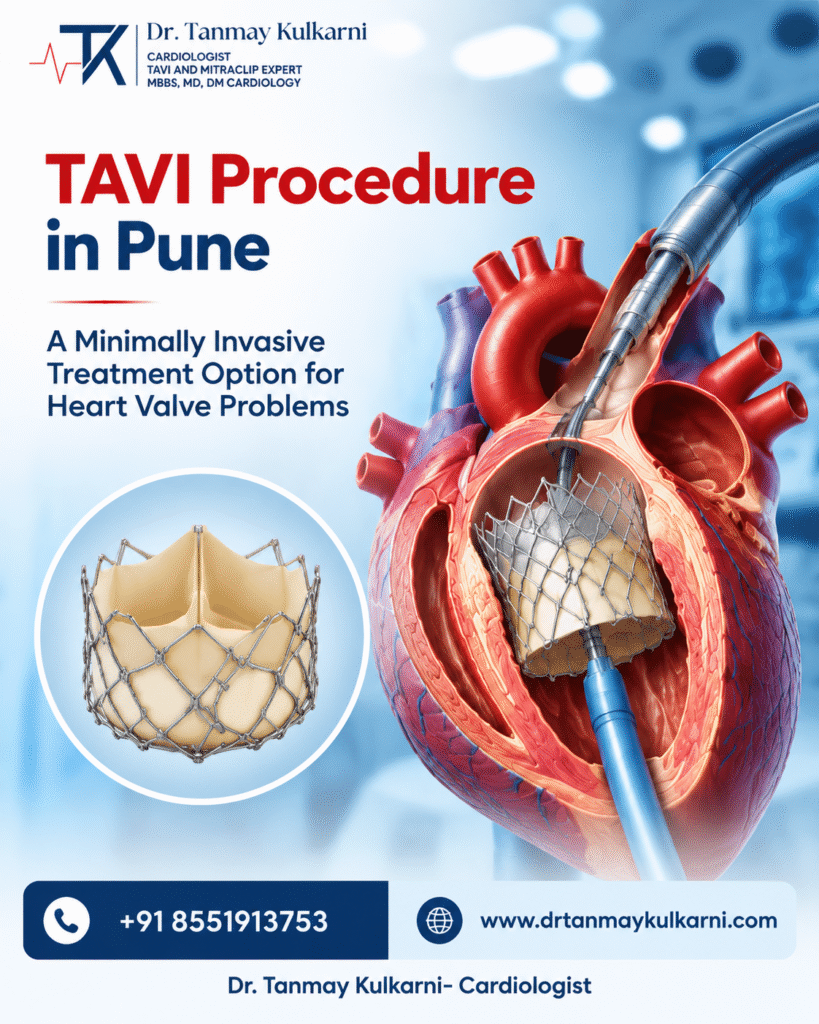
TAVI Procedure: A Minimally Invasive Treatment Option for Heart Valve Problems
Aortic valve disease can affect the way blood flows from the heart to the rest of the body. One important condition is aortic stenosis, in which the aortic valve becomes narrowed and restricts blood flow. As the condition progresses, some patients may require aortic valve replacement. TAVI, also called TAVR, is a less invasive approach that can replace the diseased aortic valve without removing the old valve.
For patients and families researching TAVI Procedure in Pune, understanding how the treatment works, who may be considered for it, and what the evaluation involves can make discussions with a cardiac team easier.
Dr. Tanmay S Kulkarni – Cardiologist in Pune provides cardiac consultation and advanced heart care for patients with cardiovascular and heart valve conditions.
Understanding Aortic Valve Disease
The aortic valve opens when the heart pumps blood into the body’s main artery, the aorta. When this valve becomes narrowed, the heart may need to work harder to push blood through the restricted opening.
Aortic stenosis may initially produce few noticeable symptoms. As the condition progresses, patients may experience:
- Breathlessness, particularly during activity
- Chest discomfort
- Fatigue or reduced exercise capacity
- Dizziness or fainting
- Difficulty performing usual activities
The severity of aortic stenosis and the patient’s overall health are important factors when determining appropriate treatment.
What Is TAVI?
TAVI stands for Transcatheter Aortic Valve Implantation, while TAVR stands for Transcatheter Aortic Valve Replacement. Both terms describe a catheter-based procedure used to replace a diseased aortic valve.
Instead of removing the existing valve through conventional open-heart surgery, a replacement valve is delivered through a catheter. The new valve is positioned within the diseased valve and expanded into place.
TAVI may be considered for selected patients with severe aortic stenosis after detailed evaluation by a cardiac team.
How Does the TAVI Procedure Work?
TAVI is performed using a catheter-based approach. In many cases, the replacement valve is introduced through an artery in the groin, known as the transfemoral approach. Other access routes may be considered depending on the patient’s anatomy and medical circumstances.
The replacement valve is compressed around the delivery system. Once it reaches the diseased aortic valve, it is expanded into position. The replacement valve then takes over the function of regulating blood flow through the aortic valve.
The exact technique and approach depend on the patient’s anatomy and the treatment plan developed by the cardiac team.
Who May Be Considered for TAVI?
TAVI may be considered for patients with significant aortic stenosis after a detailed medical assessment.
Several factors may be considered, including:
Age and overall health: Age, other medical conditions, and general health can influence treatment planning.
Valve anatomy: Imaging studies help the cardiac team evaluate the valve and surrounding structures.
Surgical risk: The potential risks and benefits of different treatment approaches are assessed individually.
Life expectancy and long-term considerations: The expected durability of the valve and future treatment needs may also be discussed.
The decision between TAVI and surgical valve replacement should be individualized rather than based on one factor alone.
Tests Before TAVI
A detailed evaluation is important before valve replacement. Depending on the individual patient, investigations may include:
- Medical history and physical examination
- Echocardiography
- Electrocardiogram
- Blood investigations
- Kidney function assessment
- CT imaging for anatomical planning
- Evaluation of blood vessels used for catheter access
These assessments help the cardiac team determine whether the procedure is appropriate and plan the treatment.
TAVI vs Surgical Aortic Valve Replacement
Both TAVI and surgical aortic valve replacement can be used to treat significant aortic valve disease in appropriate patients.
TAVI is a catheter-based approach and generally does not require the conventional chest opening associated with open-heart surgery. However, it also has potential risks and may not be suitable for every patient.
Surgical valve replacement may be recommended in certain circumstances. The choice depends on factors such as age, anatomy, overall health, surgical risk, valve characteristics, and long-term treatment considerations.
Patients should discuss the available options with their cardiologist and cardiac team before deciding on treatment.
Recovery After TAVI
Recovery after TAVI varies between patients. Age, general health, other medical conditions, access route, and response to treatment can all influence recovery.
Following the procedure, the medical team monitors the patient’s heart rhythm, valve function, access site, and overall condition. Follow-up appointments and imaging may be recommended to assess the functioning of the replacement valve.
Patients should follow their cardiologist’s instructions regarding medications, physical activity, follow-up visits, and symptoms that require medical attention.
When Should You Consult a Cardiologist?
Symptoms such as unexplained breathlessness, chest discomfort, dizziness, fainting, or reduced exercise tolerance should be discussed with a healthcare professional.
Patients who have already been diagnosed with aortic stenosis may require periodic evaluation to monitor the condition and determine whether treatment is needed.
Sudden or severe chest pain, severe breathlessness, fainting, or other potentially serious symptoms require urgent medical attention.
Advanced Heart Valve Care With Dr. Tanmay S Kulkarni
Managing aortic valve disease requires a careful assessment of the patient’s symptoms, valve condition, medical history, anatomy, and overall health.
Dr. Tanmay S Kulkarni provides cardiac evaluation and advanced structural heart care for patients with heart valve conditions. His areas of cardiac care include TAVI, MitraClip, angioplasty, and heart failure management.
The Google Business Profile Dr. Tanmay S Kulkarni can help patients identify the doctor’s professional profile when searching for cardiac care and information in Pune.
Patients interested in learning about TAVI or other heart valve treatment options can discuss their condition with a qualified cardiologist to understand which approach may be appropriate for them.
Frequently Asked Questions
Is TAVI the same as TAVR?
Yes. TAVI and TAVR are terms used for transcatheter aortic valve implantation or replacement.
Is TAVI suitable for every patient with aortic stenosis?
No. Suitability depends on the severity of the condition, anatomy, age, overall health, procedural considerations, and assessment by the cardiac team.
Does TAVI require open-heart surgery?
TAVI is a catheter-based procedure and generally does not involve the conventional chest opening used in open-heart surgery.
What tests are performed before TAVI?
Depending on the patient, evaluation may include echocardiography, ECG, blood tests, CT imaging, and assessment of blood vessels and overall health.
What should I do if I have symptoms of aortic stenosis?
Symptoms such as breathlessness, chest discomfort, dizziness, or fainting should be medically evaluated. Severe or sudden symptoms require urgent medical attention.