
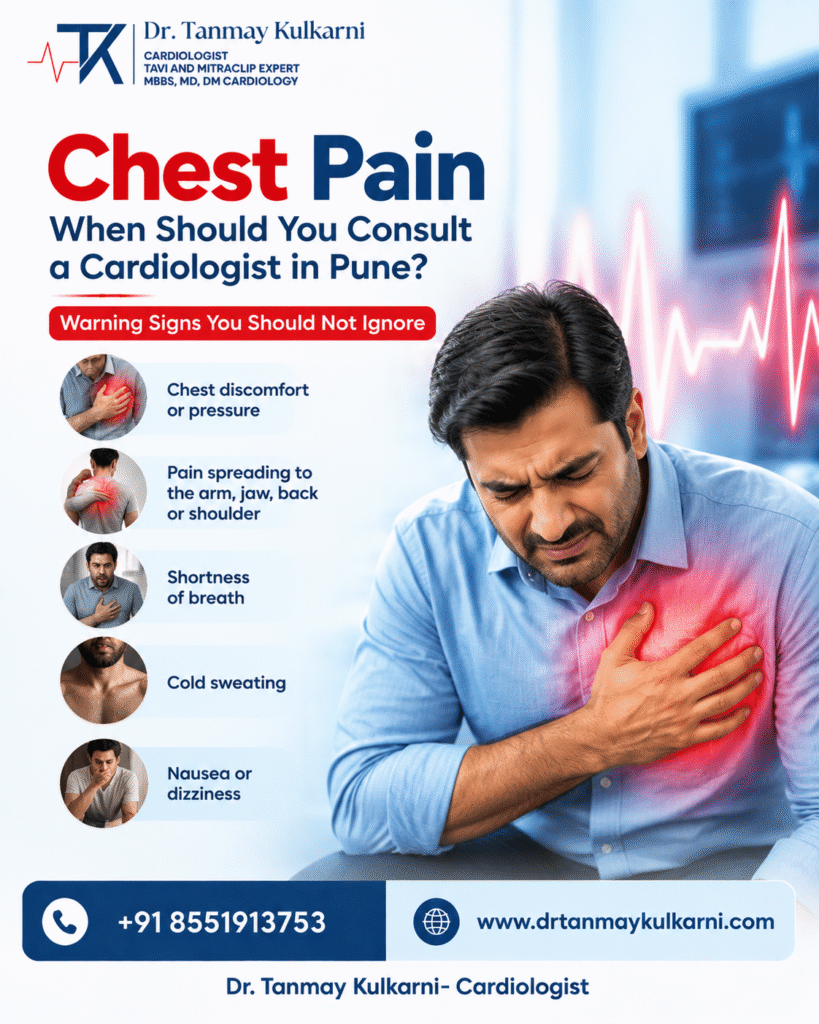
Chest pain is one of the most common symptoms that can create concern, especially when it is related to the heart. While every chest discomfort is not caused by a heart problem, certain types of pain may indicate an underlying cardiac condition and should not be ignored.
Understanding the warning signs, possible causes, and the right time to seek medical advice can help in getting timely evaluation and appropriate care.
Dr. Tanmay S Kulkarni – Cardiologist in Pune provides expert cardiac consultation and advanced heart care for patients experiencing chest pain and other heart-related concerns.
Understanding Chest Pain and Its Causes
Chest pain can occur due to several reasons, including heart-related and non-heart-related conditions. The nature, location, duration, and associated symptoms help doctors understand the possible cause.
Heart-related causes may include:
- Coronary artery disease
- Heart attack
- Angina (reduced blood flow to the heart muscle)
- Heart valve problems
- Heart rhythm disorders
Other causes may include acidity, muscle strain, lung-related problems, or anxiety. However, it is important not to self-diagnose, especially when chest pain is new, severe, or associated with other symptoms.
Warning Signs of Chest Pain That Should Not Be Ignored
Some symptoms require prompt medical evaluation. These may include:
1. Chest Pressure or Tightness
A feeling of pressure, heaviness, squeezing, or tightness in the chest can sometimes indicate reduced blood supply to the heart.
2. Pain Spreading to Other Areas
Heart-related chest discomfort may spread to:
- Left arm
- Both arms
- Jaw
- Back
- Shoulder
3. Shortness of Breath
Difficulty breathing along with chest discomfort may be a sign that the heart is under stress.
4. Sweating, Nausea, or Dizziness
Cold sweating, nausea, unusual weakness, or dizziness along with chest pain should be evaluated by a healthcare professional.
5. Chest Pain During Physical Activity
Pain that appears during walking, climbing stairs, or exertion and improves with rest may require assessment for possible heart-related causes.
When Should You Visit a Cardiologist for Chest Pain?
You should consider consulting a cardiologist if you experience:
- New or unexplained chest discomfort
- Repeated episodes of chest pain
- Chest pain during activity
- Breathlessness with chest discomfort
- A history of diabetes, high blood pressure, cholesterol, or heart disease
- Previous cardiac problems or procedures
Early evaluation can help identify risk factors and guide appropriate management.
How a Cardiologist Evaluates Chest Pain
During a cardiac consultation, the doctor may evaluate:
Medical History
Information about symptoms, lifestyle, family history, and existing health conditions helps in understanding risk factors.
Physical Examination
A detailed examination helps assess overall cardiovascular health.
Diagnostic Tests
Depending on symptoms, a cardiologist may recommend tests such as:
- ECG
- Echocardiography
- Stress testing
- Blood tests
- Advanced cardiac imaging when required
The choice of tests depends on individual symptoms and medical history.
Importance of Early Heart Evaluation
Ignoring recurring chest discomfort may delay diagnosis of underlying heart conditions. Regular evaluation and preventive care can help identify cardiovascular risks at an early stage.
Maintaining heart health also includes:
- Monitoring blood pressure and cholesterol
- Managing diabetes
- Following a balanced diet
- Staying physically active
- Avoiding smoking
- Maintaining a healthy lifestyle
Consult Dr. Tanmay S Kulkarni for Cardiac Care in Pune
If you experience chest pain or want to understand your heart health risks, timely consultation with an experienced specialist can help you receive appropriate guidance.
Dr. Tanmay S Kulkarni – Cardiologist in Pune specializes in advanced cardiac evaluation and treatment, including angioplasty, structural heart procedures, TAVI, and MitraClip procedures.
For expert guidance regarding chest pain and cardiovascular health, schedule a consultation with Dr. Tanmay S Kulkarni.
Frequently Asked Questions (FAQs)
Q1. Is every chest pain related to the heart?
No. Chest pain can have many causes, including digestive issues, muscle problems, lung conditions, or heart-related concerns. A proper medical evaluation helps identify the cause.
Q2. When is chest pain considered serious?
Chest pain with pressure, breathlessness, sweating, dizziness, or pain spreading to the arm, jaw, or back should be evaluated promptly.
Q3. Which doctor should I consult for chest pain?
A cardiologist can evaluate chest pain related to possible heart conditions and recommend appropriate tests and treatment options.
Q4. Can heart problems occur without severe chest pain?
Yes. Some people may experience mild discomfort, breathlessness, fatigue, or other symptoms instead of severe pain. Evaluation is important if symptoms are concerning.