
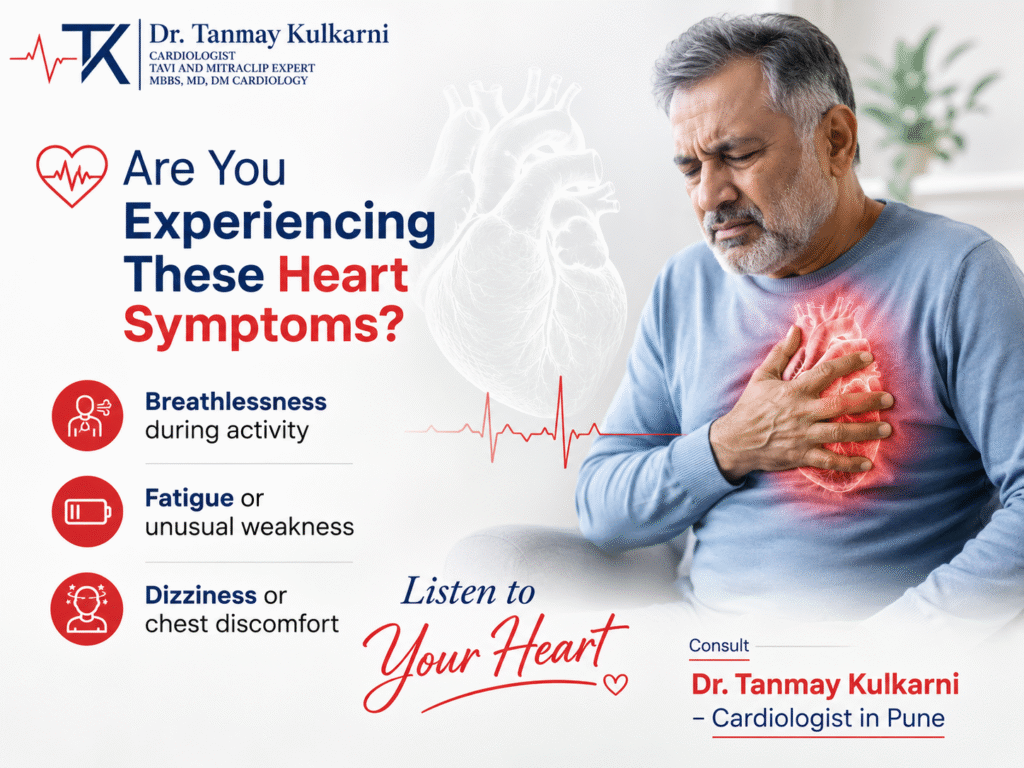
Your heart works continuously to supply blood and oxygen throughout the body. Sometimes, changes in the way you feel during daily activities can provide important clues about your cardiovascular health. Symptoms such as breathlessness, unusual fatigue, dizziness, or chest discomfort should not always be dismissed as tiredness or stress, especially when they are persistent, recurring, or occur during physical activity.
Dr. Tanmay S Kulkarni, Best Cardiologist in Pune, provides cardiac evaluation and management for people experiencing a range of heart-related concerns. Understanding common warning signs and seeking appropriate medical advice can be an important part of maintaining long-term heart health.
Common Heart Symptoms to Watch For
Heart-related symptoms can differ from person to person. Some people may experience noticeable chest discomfort, while others may mainly notice reduced exercise tolerance or breathlessness.
1. Breathlessness During Activity
Feeling short of breath after strenuous exercise can be normal. However, breathlessness that occurs during routine activities, develops more easily than before, or is accompanied by other symptoms may need medical evaluation.
Breathlessness can have several possible causes, including heart and lung conditions. A healthcare professional can assess the symptoms and determine whether further cardiac testing is appropriate.
2. Unusual Fatigue or Weakness
Persistent tiredness or a noticeable reduction in stamina can sometimes be associated with cardiovascular problems. If everyday activities that were previously comfortable begin to feel unusually tiring, it is worth discussing these changes with a doctor.
Fatigue can also result from many non-cardiac causes, so proper evaluation is important rather than assuming that the symptom has a single explanation.
3. Dizziness or Light-Headedness
Dizziness may occur for many reasons, including dehydration, medication effects, blood pressure changes, or problems affecting the heart rhythm.
If dizziness occurs repeatedly, particularly during activity or together with palpitations, chest discomfort, or fainting, medical assessment is advisable.
4. Chest Discomfort
Chest discomfort can have many causes, ranging from digestive problems and muscle strain to cardiovascular conditions. Heart-related discomfort may feel like pressure, heaviness, squeezing, or tightness, although symptoms can vary.
Chest discomfort that is sudden, severe, persistent, or associated with breathlessness, sweating, nausea, dizziness, or pain spreading to the arm, back, neck, or jaw requires urgent medical attention.
Why Should These Symptoms Be Evaluated?
Symptoms alone cannot confirm a heart condition. A doctor may consider your age, medical history, lifestyle, family history, blood pressure, cholesterol levels, diabetes status, medications, and other risk factors.
Depending on the situation, the evaluation may include an examination and tests such as an ECG, 2D Echo, blood tests, stress testing, or other cardiac investigations.
The purpose of these tests is to understand how the heart is functioning and identify whether further evaluation or treatment may be required.
Conditions That Can Cause Cardiac Symptoms
Several cardiovascular conditions can produce symptoms such as breathlessness, chest discomfort, fatigue, or dizziness. These may include:
- Coronary artery disease
- Heart valve disease
- Heart rhythm disorders
- Heart failure
- High blood pressure-related heart problems
- Certain structural heart conditions
Not everyone with these symptoms has heart disease. However, persistent or unexplained symptoms deserve appropriate medical attention.
When Is a Cardiac Check-Up Important?
A cardiac consultation may be useful if you notice new or persistent symptoms, particularly if they interfere with your daily activities.
People with cardiovascular risk factors may also benefit from discussing preventive heart care with their doctor. Risk factors can include smoking, high blood pressure, high cholesterol, diabetes, obesity, physical inactivity, and a family history of cardiovascular disease.
Regular health assessments can help identify certain risk factors before they contribute to more serious problems.
Advanced Cardiac Evaluation and Treatment
Modern cardiology offers several diagnostic and treatment options depending on the patient’s condition. Evaluation may range from routine cardiac testing to advanced procedures when clinically indicated.
For selected patients with coronary artery disease, procedures such as angioplasty and stent placement may be considered. People with significant valve disease may be evaluated for treatments such as TAVI/TAVR or other appropriate valve interventions.
For certain patients with mitral valve disease, MitraClip procedures may be considered based on detailed clinical assessment. Advanced cardiac imaging, including Cardiac MRI, can also provide additional information in selected cases.
The appropriate treatment is determined after evaluating the individual’s symptoms, test results, overall health, and specific cardiac condition.
Listen to Your Heart
Your body can sometimes provide early clues that something has changed. Breathlessness during routine activities, unexplained fatigue, recurring dizziness, or chest discomfort should not automatically be attributed to age, stress, or lack of sleep.
If symptoms are persistent or concerning, speaking with a qualified cardiac specialist can help clarify their possible cause and determine whether further evaluation is needed.
Dr. Tanmay S Kulkarni offers cardiac consultation and evaluation in Pune, with an approach focused on understanding individual symptoms and providing appropriate evidence-based care.
Taking care of your heart involves more than responding to symptoms. Maintaining healthy lifestyle habits, managing blood pressure and cholesterol, staying physically active as appropriate, avoiding tobacco, and attending recommended health check-ups can all contribute to cardiovascular well-being.
Final Thoughts
Heart symptoms can have different causes, and not every episode of breathlessness, fatigue, dizziness, or chest discomfort indicates a heart condition. However, persistent or unusual symptoms should be taken seriously.
Timely consultation can help identify potential cardiovascular concerns and guide appropriate next steps. If you experience sudden or severe chest discomfort, significant breathlessness, fainting, or other potentially serious symptoms, seek urgent medical care rather than waiting for a routine appointment.
For ongoing cardiac concerns and preventive heart care, Dr. Tanmay S Kulkarni can provide professional evaluation based on your individual health needs.
This article is intended for general health education and does not replace professional medical advice, diagnosis, or treatment.