
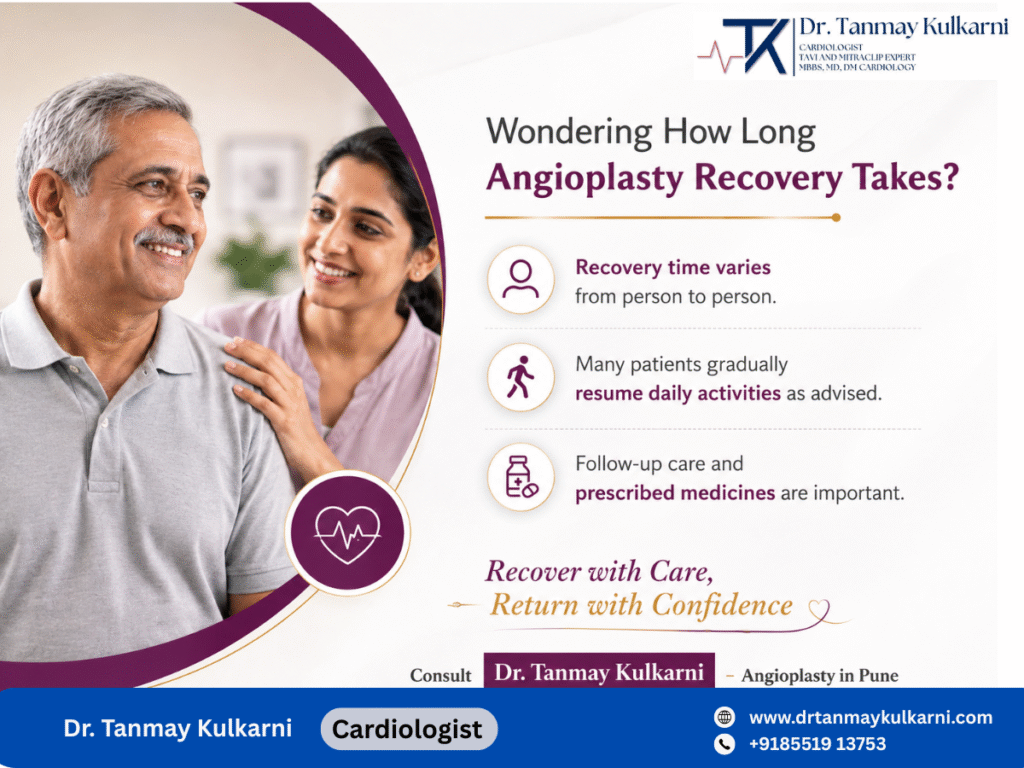
Undergoing angioplasty can be an important step in managing certain coronary artery conditions. While the procedure itself is performed in a hospital under medical supervision, recovery continues after the patient returns home. Understanding what recovery may involve can help patients and their families follow medical advice with greater confidence.
Dr. Tanmay S Kulkarni is a cardiologist in Pune who provides cardiac evaluation and treatment based on each patient’s individual medical needs. Through his Google Business Profile, Dr. Tanmay S Kulkarni, Best Angioplasty in Pune, patients can learn more about available cardiac care and seek professional guidance when appropriate.
What Is Angioplasty?
Angioplasty, also known as percutaneous coronary intervention (PCI), is a procedure used to improve blood flow through a narrowed or blocked coronary artery. During the procedure, a catheter is guided through a blood vessel toward the affected artery. A small balloon may be used to widen the narrowed area, and in many cases, a stent is placed to help keep the artery open.
The exact procedure and treatment plan depend on factors such as the location and severity of the narrowing, the patient’s overall health, and the cardiologist’s assessment.
How Long Does Recovery Take?
Recovery after angioplasty is not identical for everyone. Some patients may return to light daily activities relatively soon, while others may require more time depending on their health, the complexity of the procedure, and whether there were any complications.
Rather than following a fixed recovery schedule, patients should follow the specific instructions provided by their cardiologist. Post-angioplasty care may include recommendations about physical activity, medication, diet, wound care, and follow-up appointments.
It is important not to rush back into strenuous exercise or demanding physical activities without medical approval.
Returning to Daily Activities
Many patients gradually resume normal activities as advised by their healthcare team. The pace of recovery may depend on the patient’s symptoms, cardiovascular health, occupation, and the type of procedure performed.
Patients should pay attention to how they feel during recovery and communicate any concerns to their healthcare provider. A structured cardiac rehabilitation program may also be recommended for some individuals. Such programs can provide supervised exercise, education, and support for adopting healthier lifestyle habits.
Following professional advice can make the recovery process more organized and may help patients understand what activities are appropriate at different stages.
Why Follow-Up Care Matters
Angioplasty addresses a specific blood-flow problem, but maintaining cardiovascular health requires ongoing attention. Follow-up appointments allow the cardiologist to review the patient’s progress, discuss symptoms, assess risk factors, and adjust the treatment plan when necessary.
Prescribed medicines should be taken exactly as directed. Depending on the individual’s condition, medications may be recommended to reduce the risk of blood clots or manage cholesterol, blood pressure, or other cardiovascular risk factors.
Patients should not stop or change prescribed medicines without discussing the decision with their doctor.
Lifestyle After Angioplasty
Recovery can also be an opportunity to focus on long-term heart health. Depending on individual medical advice, healthy habits may include maintaining a balanced diet, staying physically active within recommended limits, avoiding tobacco, managing stress, maintaining a healthy weight, and keeping conditions such as diabetes and high blood pressure under control.
These measures should be personalized according to a patient’s medical history. A cardiologist can help determine which lifestyle changes are suitable and realistic.
When Should You Seek Medical Attention?
After angioplasty, patients should follow the discharge instructions provided by their healthcare team. New or worsening symptoms should not be ignored. Chest discomfort, significant breathing difficulty, fainting, unusual bleeding, or other concerning symptoms may require prompt medical evaluation.
If a patient is unsure whether a symptom is related to recovery, contacting their healthcare provider is generally preferable to self-diagnosing.
Choosing Professional Cardiac Care in Pune
When considering treatment for coronary artery disease, selecting a qualified cardiologist and understanding the available treatment options are important steps. Every patient’s condition is different, so treatment decisions should be based on appropriate medical evaluation rather than generalized information found online.
Dr. Tanmay S Kulkarni focuses on individualized cardiac assessment and treatment. Patients looking for information about angioplasty treatment, recovery, and ongoing heart care can discuss their concerns directly with a qualified cardiology professional.
For individuals searching online for Best Angioplasty in Pune, it is important to look beyond a search ranking and consider the doctor’s qualifications, clinical approach, available facilities, and suitability for the patient’s specific medical needs.
Final Thoughts
Recovery following angioplasty is a gradual process that can vary from one person to another. Following prescribed medicines, attending follow-up appointments, gradually returning to activities, and adopting appropriate heart-healthy habits can all be part of ongoing cardiovascular care.
This article is intended for general health education and does not replace an examination, diagnosis, or personalized medical advice. Patients should consult their cardiologist for recommendations based on their individual condition.