
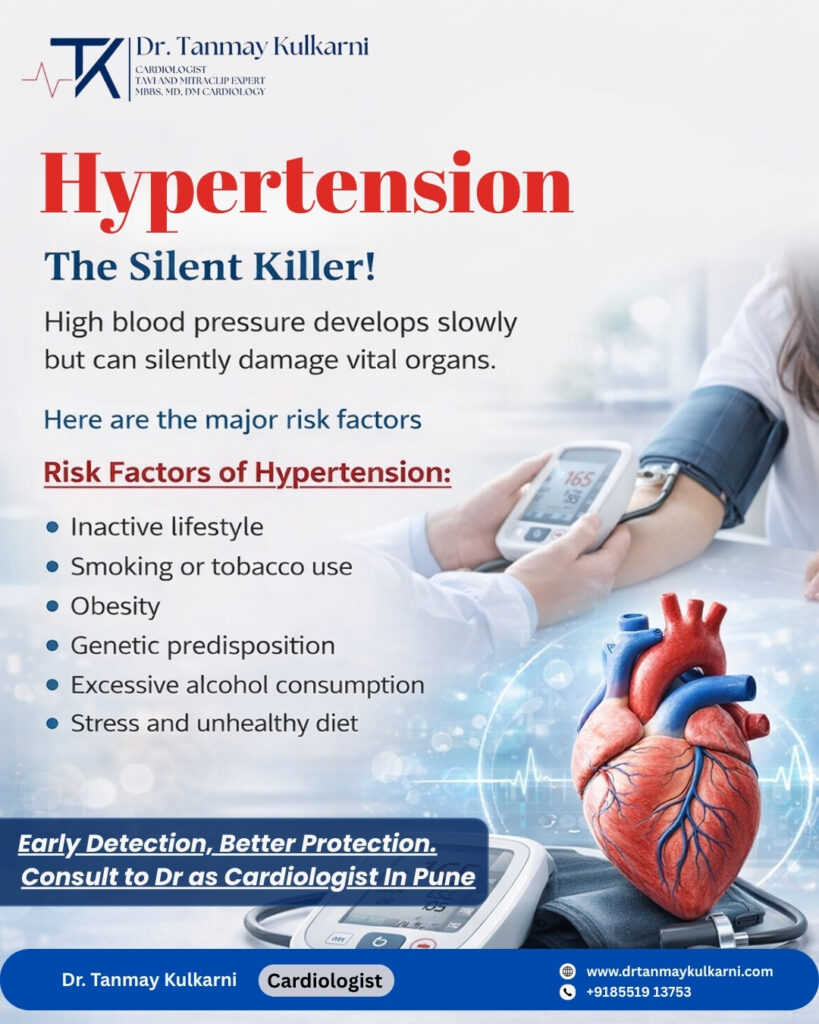
High blood pressure, medically known as hypertension, is one of the leading causes of heart disease, stroke, kidney disease, and other serious health conditions worldwide. Often referred to as the “silent killer,” hypertension usually develops gradually without causing noticeable symptoms. Many people are unaware they have high blood pressure until it leads to severe complications.
Regular blood pressure monitoring and timely medical consultation are essential for maintaining a healthy heart. If you are looking for an experienced Cardiologist in Pune, Dr. Tanmay S Kulkarni, Cardiologist in Pune, provides comprehensive evaluation, diagnosis, and personalized treatment for hypertension and other cardiovascular conditions.
What is Hypertension?
Blood pressure is the force exerted by blood against the walls of your arteries. It is measured using two values:
- Systolic Pressure: The pressure when the heart contracts.
- Diastolic Pressure: The pressure when the heart relaxes between beats.
According to current clinical guidelines, blood pressure is generally considered elevated when it remains consistently above the recommended range. Persistent high blood pressure increases the workload on your heart and blood vessels, gradually causing damage throughout the body.
Why is Hypertension Called the Silent Killer?
One of the biggest concerns with hypertension is that it often causes no obvious symptoms for many years. During this time, it can silently damage important organs, including:
- Heart
- Brain
- Kidneys
- Eyes
- Blood vessels
Many patients discover they have hypertension only after experiencing complications such as a heart attack, stroke, or kidney problems. This is why routine blood pressure screening is extremely important, even if you feel completely healthy.
Common Risk Factors for Hypertension
Several lifestyle and genetic factors increase the risk of developing hypertension.
1. Physical Inactivity
A sedentary lifestyle contributes to weight gain and poor cardiovascular fitness, increasing blood pressure over time.
2. Smoking and Tobacco Use
Nicotine narrows blood vessels and temporarily raises blood pressure. Long-term tobacco use significantly increases the risk of heart disease.
3. Obesity
Excess body weight forces the heart to work harder, making hypertension more likely.
4. Family History
Individuals with a family history of hypertension have a higher chance of developing the condition.
5. Excessive Alcohol Consumption
Heavy alcohol intake can elevate blood pressure and contribute to heart disease.
6. Unhealthy Diet
A diet high in salt, processed foods, saturated fats, and sugar can increase blood pressure and negatively impact heart health.
7. Chronic Stress
Long-term stress may contribute to unhealthy habits and temporary increases in blood pressure that can affect long-term cardiovascular health.
Possible Symptoms of High Blood Pressure
Although hypertension often has no symptoms, some individuals may experience:
- Frequent headaches
- Dizziness
- Blurred vision
- Shortness of breath
- Chest discomfort
- Fatigue
- Nosebleeds (in some cases)
These symptoms can also occur due to other medical conditions. If you experience them, consult a qualified healthcare professional for proper evaluation.
Complications of Untreated Hypertension
If left unmanaged, hypertension may increase the risk of:
- Heart attack
- Heart failure
- Stroke
- Kidney disease
- Vision loss
- Peripheral artery disease
- Aneurysm
Early diagnosis and proper treatment can significantly reduce these risks.
How is Hypertension Diagnosed?
Diagnosis involves measuring blood pressure accurately during multiple visits or through home or ambulatory blood pressure monitoring when appropriate.
Your cardiologist may also recommend additional investigations such as:
- ECG
- Echocardiography
- Blood tests
- Kidney function tests
- Lipid profile
- Urine examination
These evaluations help determine whether hypertension has affected other organs and guide the most appropriate treatment plan.
Managing Hypertension Effectively
Treatment depends on your blood pressure readings, overall health, age, and associated medical conditions.
Lifestyle modifications play an important role and may include:
- Reducing salt intake
- Following a balanced diet rich in fruits and vegetables
- Regular physical activity
- Maintaining a healthy weight
- Avoiding tobacco
- Limiting alcohol
- Managing stress
- Getting adequate sleep
Some individuals may also require prescribed medications to help control blood pressure. It is important to take medicines exactly as advised and attend regular follow-up appointments.
When Should You See a Cardiologist?
You should consider consulting a cardiologist if:
- Your blood pressure remains consistently elevated.
- You have diabetes or kidney disease.
- You have a family history of heart disease.
- You experience chest pain, breathlessness, or palpitations.
- You have previously suffered a heart attack or stroke.
- Lifestyle changes alone are not helping control your blood pressure.
Timely specialist evaluation can help prevent long-term cardiovascular complications.
Expert Heart Care with Dr. Tanmay S Kulkarni, Cardiologist in Pune
If you are searching for a trusted Cardiologist in Pune, Dr. Tanmay S Kulkarni, Cardiologist in Pune, offers comprehensive heart care with a patient-focused approach. From hypertension management and preventive cardiology to advanced cardiac evaluation, Dr. Kulkarni provides personalized treatment plans based on each patient’s individual needs.
Regular heart check-ups, early diagnosis, and consistent management can significantly reduce the risk of serious cardiovascular diseases. If you have concerns about your blood pressure or overall heart health, scheduling a consultation is an important step toward protecting your long-term well-being.
Conclusion
Hypertension is a common yet potentially serious condition that often develops without noticeable symptoms. Fortunately, it can be effectively managed through early detection, healthy lifestyle choices, regular monitoring, and appropriate medical care. Don’t wait for symptoms to appear before taking action. Routine blood pressure checks and timely consultation with a qualified cardiologist can make a significant difference in maintaining a healthy heart and preventing complications.
For expert evaluation and personalized cardiac care, consult Dr. Tanmay S Kulkarni, Cardiologist in Pune, and take proactive steps toward better heart health.