
Heart disease continues to be one of the leading causes of illness and death worldwide, and among the most common heart conditions is Coronary Artery Disease (CAD). Understanding this condition is essential for maintaining good heart health and preventing serious complications such as heart attacks.
At Dr. Tanmay S Kulkarni, Cardiologist in Pune, patient education and preventive cardiology play a vital role in helping individuals identify risk factors early and take proactive steps toward a healthier life. This article explains everything you need to know about Coronary Artery Disease, including its causes, symptoms, diagnosis, prevention, and treatment options.
What is Coronary Artery Disease (CAD)?
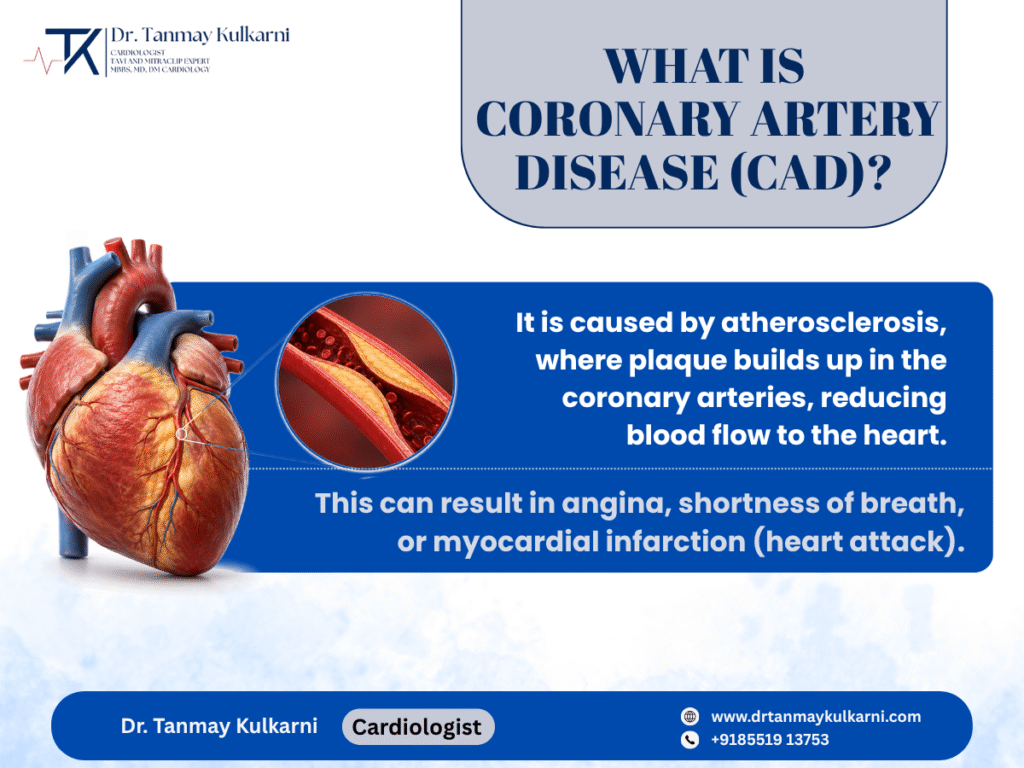
Coronary Artery Disease, commonly known as CAD, occurs when the coronary arteries that supply oxygen-rich blood to the heart muscle become narrowed or blocked due to the buildup of fatty deposits known as plaque. This process is called atherosclerosis.
Over time, plaque accumulation reduces blood flow to the heart, making it difficult for the heart muscle to receive the oxygen and nutrients it needs. If left untreated, CAD can lead to chest pain (angina), shortness of breath, irregular heart rhythms, and even a heart attack.
According to Dr. Tanmay S Kulkarni, Cardiologist in Pune, early detection and timely treatment of CAD can significantly reduce the risk of life-threatening cardiac events.
Causes of Coronary Artery Disease
The primary cause of CAD is atherosclerosis, a condition in which cholesterol, fat, calcium, and other substances accumulate inside the artery walls.
Several factors contribute to the development of CAD, including:
- High cholesterol levels
- High blood pressure (hypertension)
- Smoking and tobacco use
- Diabetes
- Obesity
- Sedentary lifestyle
- Excessive stress
- Unhealthy dietary habits
- Family history of heart disease
- Increasing age
These risk factors can damage the inner lining of the arteries, promoting plaque formation and narrowing of the blood vessels.
Common Symptoms of Coronary Artery Disease
Many individuals may not experience symptoms during the early stages of CAD. Symptoms often appear when the arteries become significantly narrowed.
Common signs and symptoms include:
1. Chest Pain (Angina)
A feeling of pressure, tightness, heaviness, or discomfort in the chest, especially during physical activity or emotional stress.
2. Shortness of Breath
Reduced blood flow to the heart can make routine activities more tiring and lead to breathing difficulties.
3. Fatigue
Persistent tiredness and reduced exercise tolerance may indicate inadequate blood supply to the heart.
4. Pain in the Arms, Neck, Jaw, or Back
Some patients experience discomfort radiating beyond the chest.
5. Heart Attack
A complete blockage of a coronary artery can cause a myocardial infarction (heart attack), requiring immediate medical attention.
If you experience any of these symptoms, it is important to seek evaluation from Dr. Tanmay S Kulkarni, Cardiologist in Pune, for a comprehensive cardiac assessment.
Who is at Higher Risk?
Certain individuals have a greater likelihood of developing CAD, including:
- People over 45 years of age
- Individuals with diabetes
- Smokers
- Patients with uncontrolled hypertension
- People with high cholesterol levels
- Individuals with a family history of heart disease
- Overweight or obese individuals
- Those with a sedentary lifestyle
Understanding your personal risk factors can help in early prevention and management.
How is Coronary Artery Disease Diagnosed?
A cardiologist may recommend various diagnostic tests to evaluate heart health and detect CAD.
These may include:
- Electrocardiogram (ECG)
- Echocardiography
- Treadmill Stress Test (TMT)
- Cardiac CT Scan
- Coronary Angiography
- Blood Tests
- Cardiac MRI in selected cases
At Dr. Tanmay S Kulkarni, advanced diagnostic tools are used to accurately identify coronary artery blockages and determine the most appropriate treatment plan.
Treatment Options for Coronary Artery Disease
The treatment of CAD depends on the severity of the disease and the patient’s overall health condition.
Lifestyle Modifications
Healthy lifestyle changes form the foundation of CAD management:
- Following a heart-healthy diet
- Regular physical activity
- Maintaining a healthy weight
- Quitting smoking
- Managing stress
- Controlling diabetes and blood pressure
Medications
Doctors may prescribe medications to:
- Lower cholesterol
- Control blood pressure
- Prevent blood clot formation
- Improve blood flow to the heart
- Reduce chest pain symptoms
Angioplasty and Stenting
For significant blockages, a minimally invasive procedure called coronary angioplasty may be performed to restore blood flow.
Coronary Artery Bypass Surgery (CABG)
In severe cases involving multiple blocked arteries, bypass surgery may be recommended.
Can Coronary Artery Disease Be Prevented?
While some risk factors such as age and family history cannot be changed, many causes of CAD are preventable through healthy lifestyle choices.
Preventive measures include:
- Eating a balanced, low-fat diet
- Exercising regularly
- Maintaining healthy cholesterol levels
- Keeping blood pressure under control
- Avoiding tobacco products
- Managing stress effectively
- Undergoing regular heart checkups
Regular preventive screenings with Dr. Tanmay S Kulkarni, Cardiologist in Pune can help identify cardiovascular risks before they become serious health concerns.
Conclusion
Coronary Artery Disease is a serious but manageable condition when diagnosed early and treated appropriately. Awareness of symptoms, understanding risk factors, and adopting a heart-healthy lifestyle can significantly reduce the likelihood of complications such as heart attacks and heart failure.
If you are experiencing symptoms of heart disease or have risk factors such as high blood pressure, diabetes, or high cholesterol, consult Dr. Tanmay S Kulkarni, Cardiologist in Pune for expert evaluation and personalized cardiac care. Early intervention can make a significant difference in protecting your heart and improving your long-term health.
Google Business Profile Name: Dr. Tanmay S Kulkarni, Cardiologist in Pune (included naturally throughout the content to support local SEO and Google Business Profile visibility).