
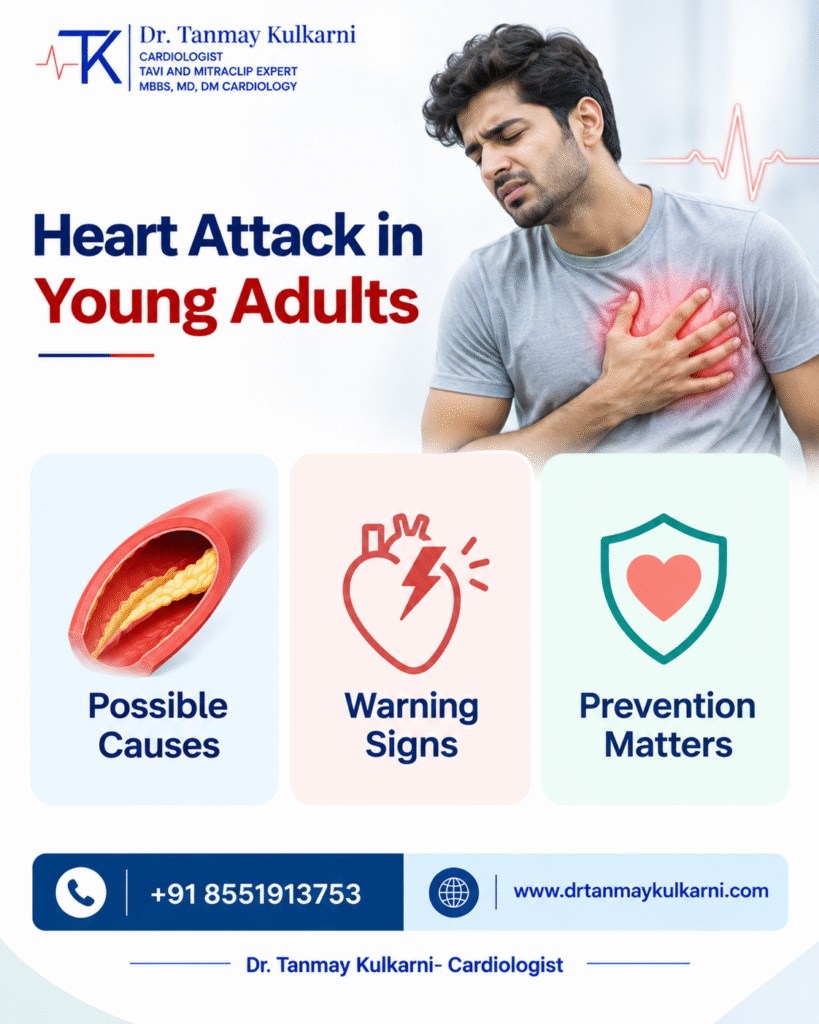
A heart attack is often associated with older adults, but younger people can also experience serious heart-related problems. Although age is an important factor in cardiovascular health, it is not the only one. Smoking, high blood pressure, diabetes, high cholesterol, obesity, family history, sedentary habits and other risk factors can affect heart health at a younger age.
Understanding the warning signs and recognising cardiovascular risk factors early can help young adults take better care of their hearts.
Dr. Tanmay S. Kulkarni is an Interventional Cardiologist in Pune who provides cardiac evaluation and management based on individual symptoms, medical history and appropriate investigations.
Can Young Adults Have a Heart Attack?
Yes. While heart attacks are more common with increasing age, younger adults are not completely protected from coronary artery disease.
A heart attack generally occurs when blood flow to part of the heart muscle becomes severely reduced or blocked. The underlying causes can vary from person to person. Some individuals may have traditional cardiovascular risk factors, while others may have a strong family history or other contributing conditions.
This is why maintaining heart health should begin well before middle age.
What Can Increase Heart Risk in Younger Adults?
Several factors may contribute to cardiovascular risk.
Smoking and tobacco use can negatively affect blood vessels and increase cardiovascular risk. Regular exposure to tobacco is an important factor that young adults should take seriously.
High blood pressure can remain unnoticed because it may not cause obvious symptoms. Over time, uncontrolled blood pressure can place additional strain on the cardiovascular system.
High cholesterol can contribute to the development of plaque within coronary arteries. Cholesterol levels should be interpreted according to an individual’s overall cardiovascular risk.
Diabetes can also affect blood vessels and increase the risk of cardiovascular disease.
Family history is another important consideration. A history of premature heart disease in close family members may indicate a higher cardiovascular risk.
In addition, physical inactivity, excess weight, poor dietary patterns, chronic stress and inadequate sleep may influence overall cardiovascular health.
What Are the Warning Signs?
Heart-related symptoms can vary between individuals. Some people may experience classic symptoms, while others may notice less obvious changes.
Possible warning signs include:
- Chest pressure, tightness or discomfort
- Breathlessness
- Unusual sweating
- Nausea or vomiting
- Dizziness or light-headedness
- Unexplained weakness
- Discomfort spreading toward the arm, shoulder, back, neck or jaw
Symptoms do not always occur in the same combination, and not every episode of chest discomfort is caused by a heart problem.
However, sudden or persistent symptoms that could indicate a cardiac emergency should not be ignored. Urgent medical evaluation is appropriate when a heart attack is suspected.
Why Should Chest Discomfort in Young Adults Be Taken Seriously?
Chest discomfort in a younger person can have many possible causes, including muscular problems, acidity, anxiety and other non-cardiac conditions. However, it is important not to assume the cause without appropriate assessment when symptoms are new, severe, persistent or associated with other concerning symptoms.
A cardiologist may consider the nature of the symptoms, medical history, blood pressure, risk factors and examination findings before deciding whether further testing is appropriate.
Depending on the situation, investigations may include an ECG, echocardiogram, blood tests, stress testing or advanced cardiac imaging.
How Is Heart Risk Evaluated?
Cardiac evaluation is not based on one test alone. A comprehensive assessment may include personal and family medical history, lifestyle factors, blood pressure, blood sugar, cholesterol and other relevant investigations.
For some individuals, an ECG test may be useful for assessing the heart’s electrical activity. An echocardiogram can provide information about heart structure and function.
When symptoms or risk factors require additional evaluation, the cardiologist may recommend further testing based on the individual’s clinical situation.
The purpose of these investigations is not simply to identify disease but also to understand the person’s overall cardiovascular risk.
How Can Young Adults Protect Their Heart?
Heart health begins with everyday habits.
Regular physical activity can support cardiovascular fitness. A balanced diet with appropriate portions, adequate vegetables and fruits, whole grains and healthier sources of protein can also support overall health.
Avoiding tobacco is particularly important. Young adults who smoke or use other tobacco products should consider professional support to stop.
Regular monitoring of blood pressure, blood sugar and cholesterol can help identify risk factors that may otherwise remain unnoticed.
Sleep and stress management are also important components of a healthy lifestyle. Long-term stress does not automatically mean that a person has heart disease, but maintaining healthy coping strategies can contribute to overall wellbeing.
People with a significant family history of early heart disease should discuss their individual risk factors with a qualified healthcare professional.
When Should You Seek Medical Attention?
Any sudden or unexplained chest discomfort should be taken seriously when it is severe, persistent, occurs with breathlessness, sweating, dizziness, nausea or discomfort spreading to other areas.
If symptoms suggest a possible cardiac emergency, do not wait for a routine consultation. Seek emergency medical care promptly.
For non-emergency concerns, a cardiology consultation can help determine whether symptoms require further evaluation.
Cardiac Care in Pune
Dr. Tanmay S. Kulkarni provides cardiology consultation and interventional cardiac care in Pune, including consultation at Baner and hospital-based locations such as MMF Ratna Memorial Hospital and Joshi Hospital.
His clinical areas include coronary artery disease, angioplasty, structural heart interventions, TAVI, MitraClip, and advanced cardiac imaging.
For young adults concerned about their cardiovascular health, an appropriate evaluation can help identify risk factors and guide further care based on individual needs.
The Importance of Early Heart Awareness
Heart health is not something that should only be considered after the age of 40 or 50. Young adults can also benefit from understanding their risk factors, maintaining healthy habits and recognising symptoms that require attention.
Knowing your blood pressure, cholesterol and blood sugar levels, avoiding tobacco, staying physically active and seeking medical advice when concerning symptoms appear can all contribute to better cardiovascular awareness.
Most importantly, never dismiss a potentially serious symptom simply because of your age. A proper medical evaluation is the safest way to understand what may be causing a new or unusual symptom.
Dr. Tanmay S. Kulkarni, Cardiologist, focuses on individualised cardiac assessment and evidence-based management for patients seeking heart care in Pune.