
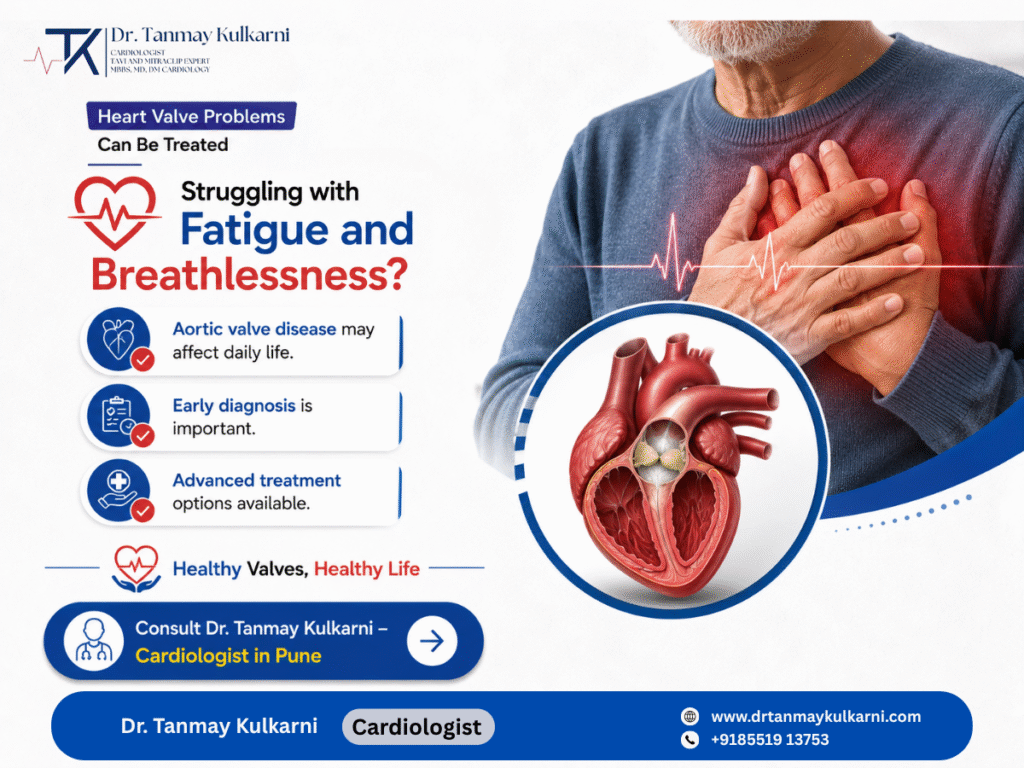
Heart valve problems can affect how efficiently the heart pumps blood throughout the body. While some valve conditions may develop gradually and cause few symptoms in the early stages, others can lead to noticeable problems such as fatigue, breathlessness, chest discomfort, dizziness, or reduced ability to perform daily activities. Recognizing these symptoms early and seeking appropriate medical evaluation can help in managing heart valve conditions effectively.
If you are experiencing persistent cardiac symptoms or have been diagnosed with a valve-related condition, consulting an experienced heart specialist is an important step. Dr. Tanmay S Kulkarni, Best Cardiologist in Pune, provides cardiac evaluation and guidance for patients with various heart-related concerns, including heart valve problems.
What Are Heart Valve Problems?
The human heart has four valves that help maintain the proper direction of blood flow through the heart chambers. These include the aortic, mitral, tricuspid, and pulmonary valves. When one or more of these valves do not function normally, it can affect the heart’s ability to circulate blood efficiently.
Two common types of valve problems are stenosis and regurgitation. Stenosis occurs when a heart valve becomes narrowed or stiff, making it difficult for blood to pass through. Regurgitation happens when a valve does not close properly, allowing some blood to flow backward.
The severity of a valve condition can vary from person to person. Some individuals may only require regular monitoring, while others may benefit from medications or advanced procedures, depending on the specific valve problem and its impact on heart function.
Common Symptoms of Heart Valve Disease
Heart valve problems may not always cause symptoms immediately. As the condition progresses, however, some people may experience:
- Shortness of breath, particularly during physical activity
- Unusual tiredness or fatigue
- Reduced exercise tolerance
- Chest discomfort or pressure
- Dizziness or lightheadedness
- Fainting in some cases
- Awareness of an irregular or rapid heartbeat
- Swelling in the feet, ankles, or legs
These symptoms can also be associated with other heart or non-cardiac conditions. Therefore, it is important not to assume the cause without proper medical assessment.
If symptoms such as breathlessness or unexplained fatigue persist, a consultation with a cardiologist can help determine whether further evaluation is required.
What Causes Heart Valve Problems?
Heart valve disease can develop for different reasons. Age-related changes may cause valves to become thickened or less flexible. Certain congenital heart conditions can affect valve structure from birth. Other possible causes may include infections affecting the heart valves, rheumatic heart disease, or other underlying cardiovascular conditions.
Aortic valve disease is one condition that may affect the heart’s ability to pump blood effectively. Depending on the type and severity of the problem, appropriate evaluation and timely management are important.
How Are Heart Valve Problems Diagnosed?
A cardiologist may begin with a detailed medical history and physical examination. The doctor may listen to the heart for abnormal sounds, such as a heart murmur, which can sometimes indicate a valve-related issue.
Depending on the symptoms and clinical findings, additional tests may be recommended. These can include an echocardiogram, which uses ultrasound technology to assess the structure and function of the heart and its valves. Other tests, such as an electrocardiogram, chest imaging, or specialized cardiac investigations, may also be considered when appropriate.
Early diagnosis can help doctors understand the severity of the valve condition and determine an appropriate treatment or monitoring plan.
Treatment Options for Heart Valve Problems
Treatment depends on several factors, including the type of valve disease, its severity, symptoms, overall heart function, and the patient’s general health.
For some people, regular monitoring and lifestyle modifications may be sufficient, particularly when the condition is mild and does not significantly affect heart function. Medications may be prescribed to help manage symptoms or associated conditions when clinically appropriate.
In more advanced cases, a patient may require an intervention to repair or replace the affected valve. The choice of treatment is individualized and depends on the specific diagnosis. Advances in cardiology have also introduced less invasive treatment approaches for selected patients.
The key is to undergo a thorough cardiac evaluation and discuss the available options with a qualified cardiologist.
When Should You Consult a Cardiologist?
Do not ignore persistent breathlessness, unexplained fatigue, chest discomfort, dizziness, or a noticeable decline in exercise capacity. These symptoms may have many causes, but they deserve appropriate medical attention, especially when they are new, worsening, or affecting daily life.
A timely consultation can help identify potential heart-related issues and guide further evaluation. If you have already been diagnosed with a heart valve problem, regular follow-up can help monitor changes in your condition and determine whether treatment needs to be adjusted.
Expert Cardiac Care in Pune
If you are looking for a Best Cardiologist in Pune for evaluation of heart-related concerns, Dr. Tanmay S Kulkarni offers professional cardiac consultation and guidance. Patients experiencing symptoms that may be associated with heart valve disease can discuss their concerns and undergo appropriate evaluation based on their individual health needs.
Heart valve problems should not always be viewed as untreatable. With accurate diagnosis, regular monitoring, and suitable medical or procedural management when required, many patients can receive effective care tailored to their condition.
If you are experiencing ongoing fatigue, breathlessness, or other symptoms that concern you, consider discussing them with a qualified cardiologist. Dr. Tanmay S Kulkarni, Best Cardiologist in Pune, can help guide you through the evaluation process and explain appropriate care options based on your cardiac health.
Note: This content is for general health education and does not replace a personal medical consultation. If you experience severe or sudden chest pain, significant difficulty breathing, fainting, or other emergency symptoms, seek immediate medical attention.